 Mike Lee
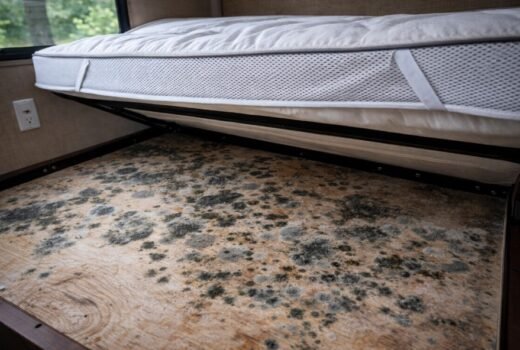
Mold under your RV bed is a common problem. Many RV owners deal with it at some point. You may not see it at first. But you might smell it. A musty odor is often the first warning sign.
The good news is this: you can stop mold before it starts. You just need to understand why it happens and what simple steps will keep your camper bed dry.
This guide will show you how to prevent mold under an RV mattress using easy, low-cost solutions.
Why Mold Grows Under an RV Bed
Mold needs three things to grow:
- Moisture
- Warm air
- A dark space
The space under your RV bed has all three.
When you sleep, your body gives off heat and moisture. That warm air moves down through the bed. If the platform under the bed is cold, condensation forms. This is just like water droplets forming on a cold drink.
Most camper beds sit on solid plywood. There is little to no airflow under them. That trapped moisture has nowhere to go. Over time, this leads to RV bed condensation problems and mold growth.
Small campers and travel trailers have another issue. Cooking, showering, and even breathing add moisture to the air. In a tight space, humidity builds up fast.

Signs You May Already Have a Moisture Problem
Before we talk about prevention, check for warning signs:
- A musty smell near the bed
- Damp plywood under the bed
- Dark or black spots on the bottom of the bed
- Allergy symptoms while sleeping
- Cold, wet surfaces in the morning
If you notice these signs, act quickly. Early action can prevent serious damage.
Simple Daily Habits That Prevent Mold
You do not need expensive tools to prevent camper bed mold. Start with these easy habits.
1. Lift the Bed Often
Every few days, lift the bed and let air flow underneath. If you are camping in humid weather, do this daily.
Fresh air dries trapped moisture.
2. Use Roof Vents and Windows
Open a roof vent slightly, even at night. If it is safe, crack a window.
Air movement reduces humidity inside your RV.
3. Run Vent Fans While Cooking or Showering
Steam from cooking and showers adds moisture quickly. Always turn on your exhaust fan.
4. Keep Wet Items Away From the Bed
Do not store wet towels, shoes, or clothes near your sleeping area. Moisture spreads fast in small spaces.
These small steps make a big difference in preventing moisture under an RV mattress.
Improve Airflow Under the Bed
Airflow is the most important part of mold prevention.
Why Airflow Matters
When air moves, moisture dries. When air is trapped, moisture builds.
Solid plywood platforms trap moisture. Improving ventilation under the bed helps solve this problem.
Option 1: Install a Slatted Base
Wood slats allow air to move under the bed. If your platform is solid, you can:
- Drill ventilation holes
- Replace part of it with slats
- Add small spacing boards
Even small gaps help.
Option 2: Add a Ventilation Mat
A mattress ventilation mat for RV use is one of the best solutions. These are breathable layers placed between the bed and the platform.
They create space for air to flow and help stop condensation buildup in a camper bed.
This is a popular solution for travel trailers and motorhomes in humid climates.
Control Humidity Inside Your RV
Humidity control is key to stopping mold growth.
Ideal Humidity Level
Keep indoor humidity between 30% and 50%. Anything higher increases the risk of mold.
A small digital humidity monitor is inexpensive and helpful.
Use a Small Dehumidifier
Compact RV dehumidifiers work well in small spaces. They remove excess moisture from the air.
If you have electrical hookups, this is a great long-term solution.
Use Moisture Absorbers
If you do not have power, use moisture absorbers like hanging bags or small tubs. These help reduce damp air inside the camper.
Run the Air Conditioner
Air conditioners remove humidity from the air. Running your AC during humid weather helps prevent moisture under the bed.
Add Insulation to Reduce Condensation
Cold surfaces cause condensation. If your bed platform sits against an outside wall, it may get very cold at night.
When warm air hits that cold surface, water forms.
Insulation Options
You can add:
- Foam board insulation under the platform
- Reflective insulation sheets
- Thin rigid foam between the bed and wall
This helps keep surfaces warmer and reduces RV mattress condensation.
Insulation is especially helpful for winter camping or early spring trips.
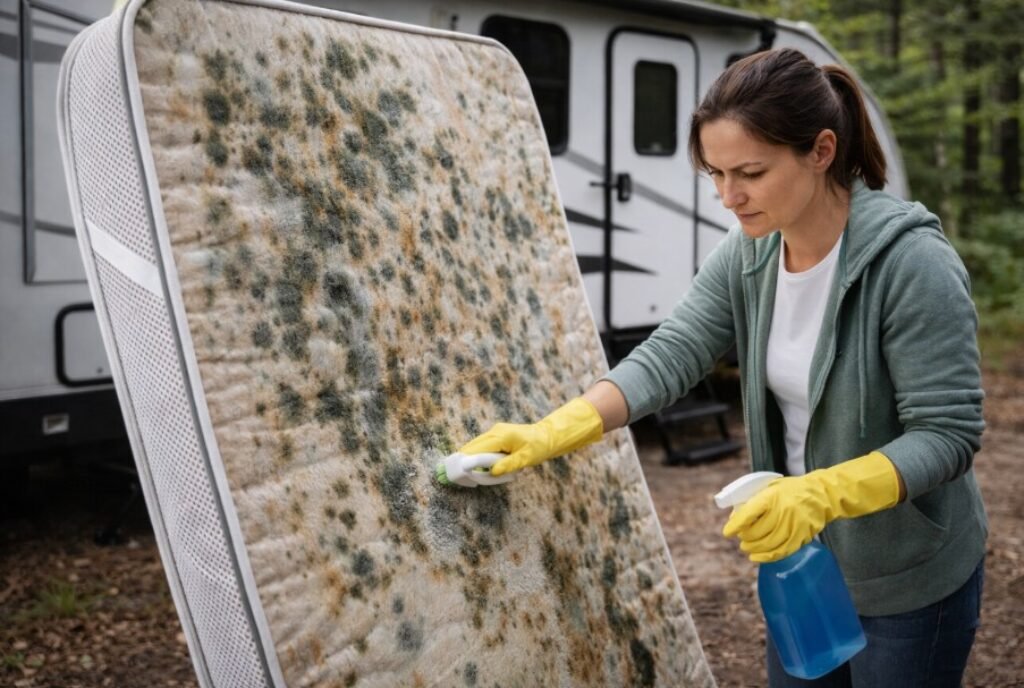
Deep Cleaning and Mold Removal
If you already see mold, clean it safely.
Step 1: Remove the Bed
Take the bed outside if possible. Let it dry in direct sunlight. Sunlight helps kill mold spores.
Step 2: Clean Light Surface Mold
For small spots:
- Mix white vinegar and water
- Spray lightly
- Wipe clean
- Let it dry fully
Never soak the bed. Too much water makes the problem worse.
Step 3: Dry the Platform
Clean and dry the plywood completely. Use fans if needed.
If the mold is deep or widespread, replacing the bed may be the safest choice.
Best Long-Term Solutions for Preventing Mold Under an RV Mattress
If you want a long-term fix, combine several strategies.
The most effective setup includes:
- A ventilation mat
- A humidity monitor
- Regular airflow
- Insulation on cold surfaces
This layered approach works best for preventing camper mattress moisture problems.
Seasonal Mold Prevention Checklist
Different seasons bring different challenges.
Spring
- Inspect under the bed after winter storage
- Air everything out
- Check for damp spots
Summer
- Monitor humidity daily
- Use fans and vents
- Run AC during humid weather
Fall
- Clean and dry the bed before storage
- Add moisture absorbers
- Leave interior doors slightly open
Winter Storage
- Remove the bed if possible
- Use dehumidifiers or moisture control products
- Visit and air out the RV monthly
Following this routine keeps mold from forming during long storage periods.
Common Mistakes to Avoid
Many RV owners accidentally make the problem worse.
Avoid these mistakes:
- Placing plastic directly under the bed (it traps moisture)
- Ignoring small musty smells
- Closing all vents tightly in humid weather
- Skipping inspections during storage
Moisture problems grow slowly. Catching them early saves money and stress.
Why Mold Prevention Matters
Mold can damage:
- Your bed
- Your plywood platform
- Your RV walls
- Your health
Breathing mold spores may cause headaches, allergies, or coughing.
Replacing a damaged bed can be expensive. Fixing rotted wood costs even more.
Preventing mold under an RV mattress is much cheaper than repairing damage later.
Final Thoughts
Moisture under your camper bed is common, but it is preventable.
Focus on these key steps:
- Improve airflow
- Control humidity
- Add insulation if needed
- Check regularly
You do not need expensive upgrades. Simple habits and smart ventilation choices will protect your sleeping space for years.
By staying alert and keeping air moving, you can enjoy dry, comfortable nights on every trip.