 Mike Lee
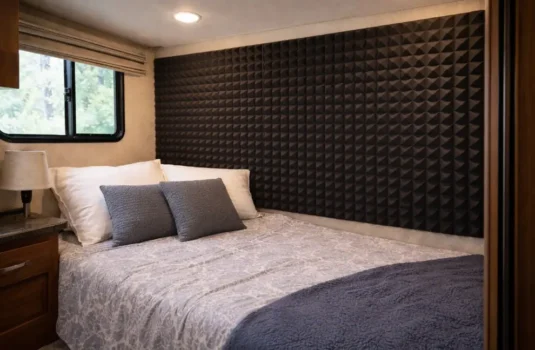
Getting good rest in an RV can be tough. Noise travels easily through thin walls. You may hear traffic, people talking, or even the wind shaking your camper. All of this can make it hard to relax and fall asleep.
The good news is that you can make your RV bedroom much quieter. You don’t need to spend a lot of money or do major work. With a few smart changes, you can cut down noise and enjoy more peaceful nights.
Why RV Bedrooms Are So Noisy
RVs are built to be light and mobile. Because of this, the walls are much thinner than in a house. Thin walls let sound pass through very easily.
Here are some common noise problems:
- Cars and trucks driving by
- Loud neighbors at campgrounds
- Rain hitting the roof and walls
- Wind shaking the RV
- Sounds from inside, like fans or plumbing
Even small noises can feel loud when you are trying to sleep. That’s why sound control is so important for better rest.
Soundproofing vs. Sound Absorbing
Before you start, it helps to know the difference between two key ideas:
Soundproofing means blocking noise from getting in or out. This usually takes heavy, dense materials.
Sound absorption means soaking up sound so it doesn’t bounce around. This uses soft materials like foam or fabric.
In most RVs, full soundproofing is hard to achieve because of weight and space limits. But sound absorption works very well and is much easier to do.

Best Materials for Quieting RV Bedroom Walls
You have many options to reduce noise. Some are simple and cheap, while others work even better but cost more.
1. Acoustic Foam Panels
These are soft foam squares that stick to your walls.
Why they help:
- Absorb sound waves
- Reduce echo inside the RV
- Lightweight and easy to install
Tips:
- Place them near your bed
- Cover the wall that faces the main noise source
2. Mass Loaded Vinyl (MLV)
This is a heavy, flexible material that blocks sound.
Why it helps:
- One of the best ways to stop outside noise
- Works better than foam for blocking sound
Things to watch:
- It is heavier than other options
- You may only want to use it on one wall
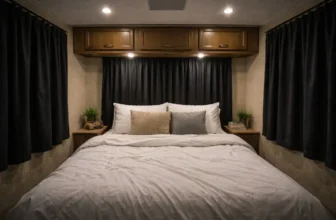
3. Thick Curtains or Moving Blankets
This is one of the easiest and cheapest fixes.
Why they help:
- Block and absorb sound at the same time
- Easy to hang and remove
Best places to use them:
- Over windows
- On walls near your bed
- Between sleeping and living areas
4. Peel-and-Stick Insulation Panels
These panels are great because they do two jobs.
Benefits:
- Reduce noise
- Help keep your RV warm or cool
They are easy to install and don’t take up much space.
5. Rugs and Fabric Wall Hangings
Soft surfaces help stop sound from bouncing.
Simple ideas:
- Hang a thick rug on the wall
- Use tapestries or quilts
- Add padded headboards
These also make your RV feel more cozy.
Step-by-Step Guide to Soundproofing Your RV Bedroom
You don’t have to do everything at once. Follow these steps to get the best results.
Step 1: Find the Main Noise Sources
Sit in your RV and listen. Where is the noise coming from?
- One wall?
- A window?
- The door?
Focus on the loudest areas first.
Step 2: Seal Gaps and Cracks
Sound can sneak through small openings.
Check for:
- Gaps around windows
- Door seals
- Wall seams
Use weather stripping or sealant to close these spaces.
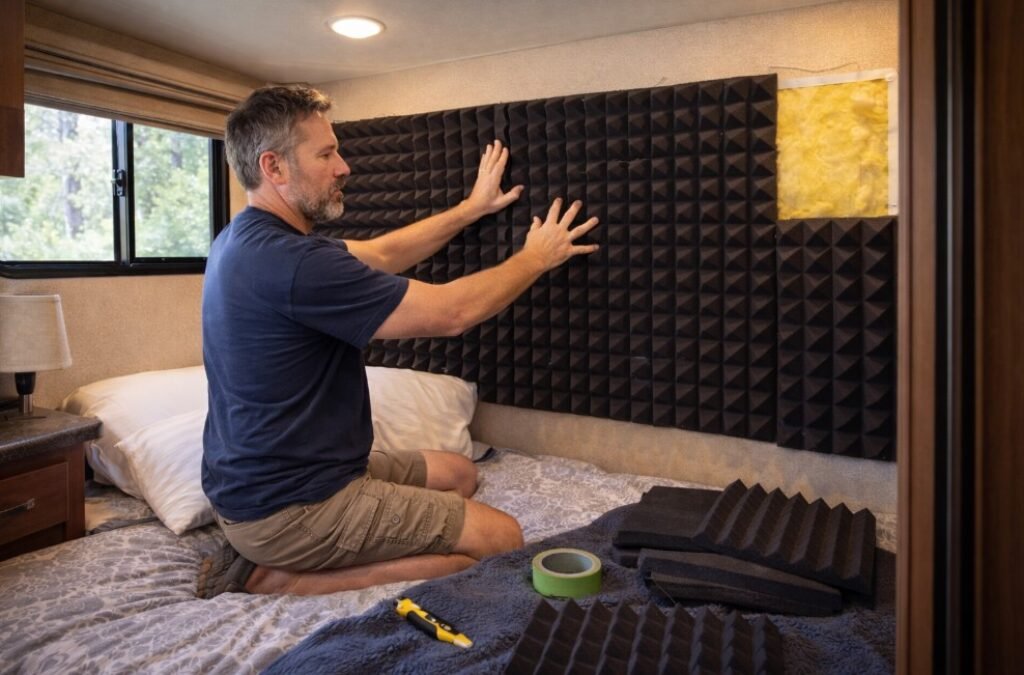
Step 3: Add Soft Materials
Start with easy fixes like:
- Curtains
- Blankets
- Foam panels
These will quickly reduce noise inside your RV.
Step 4: Add Heavier Barriers
If noise is still a problem, try:
- Mass loaded vinyl
- Thicker wall panels
Use these only where needed to avoid adding too much weight.
Step 5: Test and Adjust
After each change, listen again. You may need to move things around or add more coverage.
Soundproofing on a Budget
You don’t need fancy products to make a big difference.
Here are some low-cost ideas:
- Hang moving blankets from hooks
- Use old comforters or quilts
- Add extra pillows along walls
- Roll up towels and place them near gaps
These simple tricks can help improve rest without spending much money.
Advanced Tips for a Quieter RV Bedroom
If you want even better results, try these ideas:
Layer Your Materials
Using more than one type of material works best. For example:
- Foam panels + curtains
- MLV + fabric covering
This helps block and absorb sound at the same time.
Don’t Forget Windows and Doors
Windows are a major source of noise.
Try:
- Blackout curtains
- Reflective window covers
- Foam inserts for nighttime use
Reduce Vibration
Some noise comes from movement.
To fix this:
- Tighten loose screws
- Add rubber pads under furniture
- Use anti-vibration mats
Use White Noise
A small fan or white noise machine can help cover outside sounds. This makes sudden noises less noticeable.
Common Mistakes to Avoid
It’s easy to make a few errors when trying to quiet your RV.
Avoid these:
- Adding too much weight to walls
- Blocking airflow or vents
- Expecting total silence
- Using only one type of material
A balanced approach works best.
Maintenance Tips
Once your setup is complete, keep it in good shape.
- Check adhesives on panels
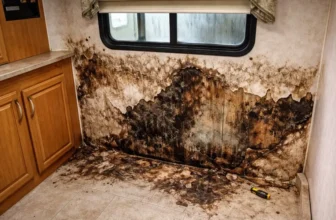
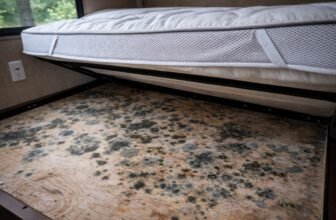
- Watch for moisture behind materials
- Clean fabrics to prevent odors
- Adjust your setup for different campsites
This will help your soundproofing last longer.
Final Thoughts
A noisy RV can ruin a good night of rest. But with a few simple changes, you can create a much quieter space.
Start small. Add soft materials, seal gaps, and build from there. Over time, you’ll notice a big difference in comfort.
Better rest makes every trip more enjoyable. When your bedroom is quiet, you wake up ready to enjoy the road ahead.