 Mike Lee
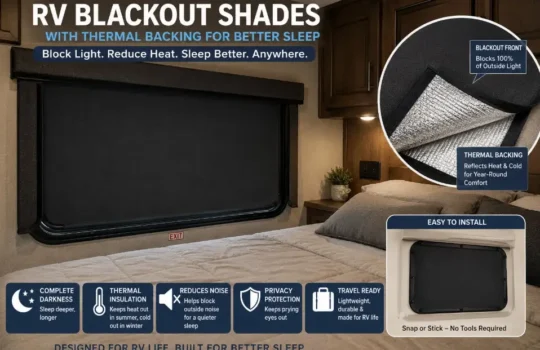
You find the perfect spot. Quiet trees, a nice view, no neighbors too close. Then the sun comes up at 5 a.m., your rig turns into an oven, and you’re wide awake and sweating before your coffee’s even on.
Here’s the good news. You don’t need a bigger air conditioner or a later checkout time. You need better window covers.
Blackout shades with thermal backing block the light and the heat at the same time. For most people, they’re the cheapest upgrade that actually helps you rest through the night. Let’s walk through why they work, what they cost, and how to pick the right kind for your rig.
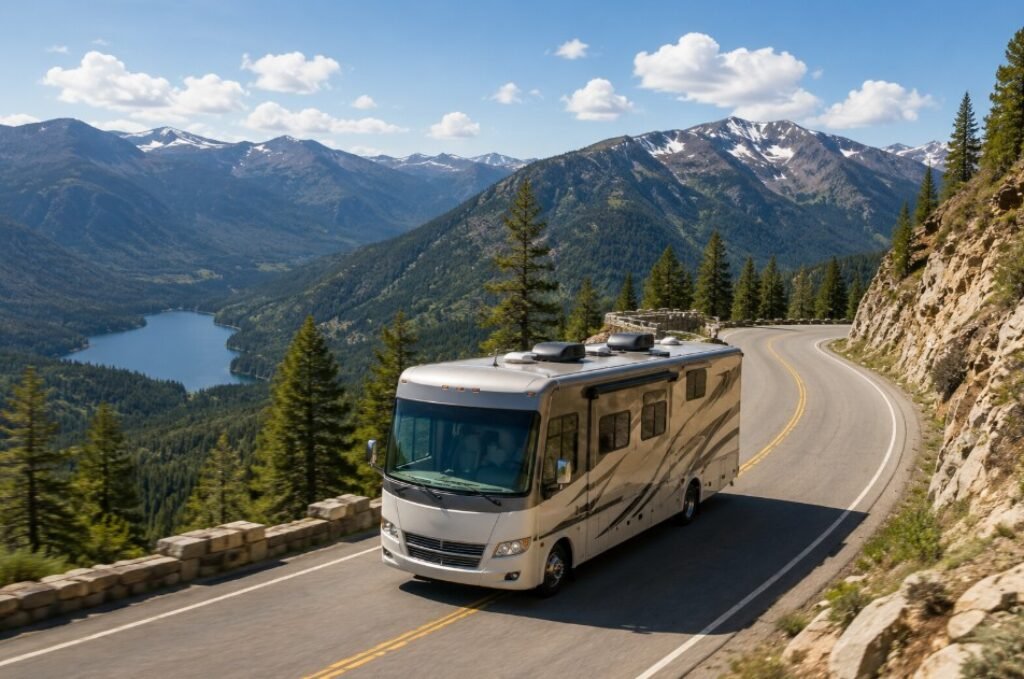
What Thermal Backing Really Means for RV Window Covers
Let’s clear up the words first, because they sound fancier than they are.
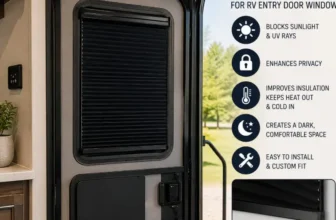
Blackout means the shade blocks the light. Full stop. A good one makes your bedroom dark even at noon.
Thermal backing is an extra layer. It is usually foam or a shiny foil that slows heat down. In summer it keeps heat from pushing in. In winter it keeps your warm air from leaking out. Think of it like the difference between a thin bedsheet over your window and a thick, padded curtain. One barely does anything. The other changes the whole room.
Put the two together and you get thermal RV window covers that keep your space dark and closer to the temperature you actually want.
Why Your RV Windows Make It So Hard to Sleep
Your house has thick walls, insulation, and small windows. Your RV has none of that.
RV windows are big, thin, and made of single-pane glass. That’s just one thin layer of glass between you and the weather. Heat pours right through it. In the summer it comes in. In the winter it goes out.
Your RV is basically a metal box with a lot of glass.
That’s why the same shade that’s just “nice to have” at home becomes a real upgrade on the road. Better RV window insulation isn’t a small thing when your walls are two inches thick and your windows are the weak spot.
The Real Benefits of RV Blackout Shades
Let’s rank these by what matters most, and stay honest about it.
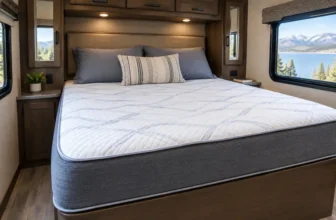
First, better rest. A dark, cooler room is easier to fall asleep in and stay asleep in. That’s the whole point.
Second, less air conditioner use. When your shades block the heat, your AC doesn’t have to work as hard. That’s a big deal if you’re on a 30-amp hookup or running off batteries out in the wild. Less run time means less power and less noise.
Third, warmth in winter. This isn’t only a summer buy. The same thermal layer that keeps heat out in July keeps heat in come December.
Fourth, privacy. At a packed campground, blackout shades mean nobody’s peeking in while you change or wind down for the night.
Types of Thermal RV Window Covers You’ll See
There are a few main kinds. Here’s a quick rundown with a plain verdict on each.
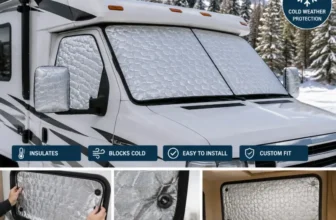
Reflectix or foil inserts. These are stiff panels you cut to fit and press into the window frame. Cheapest option, and honestly the best at blocking heat. The downside is they look plain, and you have to store them when they’re not in use.
Blackout Roman shades with thermal lining. These roll or fold up and look finished, like something from a real bedroom. They cost more and they’re permanent, but they’re easy to use every day.
Dual day and night shades. A lot of newer rigs come with these. The “night” layer is a blackout cell that blocks light and adds a little insulation. Handy because they’re already installed.
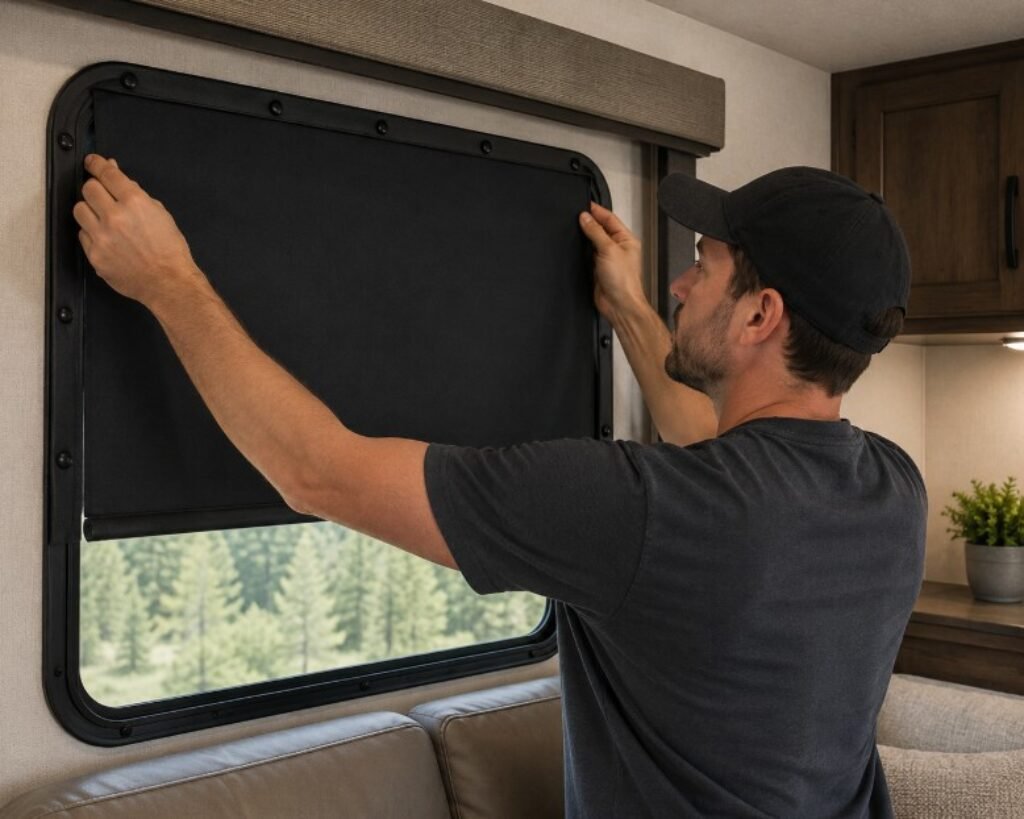
Magnetic or Velcro panels. These stick right onto the frame. Great for renters or for covering the big cab windows up front where nothing else fits well.
How to Choose the Best RV Blackout Curtains for Your Rig
Forget the spec sheet. Start with how you actually camp.
Do you boondock in the summer heat with no hookups? Go for the strongest heat blocker you can get. Foil inserts or thermal cell shades win here.
Mostly staying at campgrounds with power? You’ve got more room to pick something that looks nice, like lined Roman shades.
Renting your RV or not allowed to drill holes? Magnetic and Velcro panels are your friend. No damage, easy on, easy off.
Covering the windshield and cab? Those big front windows let in a ton of light and heat. Custom-fit foil covers or snap-in panels handle them best.
For most people, thermal blackout shades or a good set of foil inserts hit the sweet spot. They give you the most comfort for the least money.
What RV Bedroom Shades Actually Cost
Let’s talk about real numbers, because that’s what you’re really asking.
DIY foil inserts are the budget pick. You can do every window in a small camper for less than the cost of one fancy shade. A roll of Reflectix runs around 30 to 50 dollars, and you cut the panels yourself.
Custom thermal blackout shades are the pricey end. Expect anywhere from 40 to over 100 dollars per window once you add up the material and the fit.
Here’s the honest part. The cheap foil inserts look worse, but they insulate just as well as the expensive stuff and sometimes better. You can knock out a whole rig in an afternoon.
And you don’t have to redo every window at once. Start with the bedroom. That’s the one that decides whether you rest.
DIY or Buy! The Quick Call
This one’s simple.
If you’re handy and watching your budget, make foil inserts. A little Reflectix, a box cutter, and an hour of your time.
If you want it to look finished and stay put without any fuss, buy the thermal blackout shades.
Neither choice is wrong. One saves money. The other saves effort.
Common Questions About RV Window Insulation
Do these really keep the RV cooler? Yes. Blocking sunlight before it hits the inside is the single best way to keep heat out. You’ll feel the difference the first afternoon.
Will they cause moisture on my windows? They can trap a little condensation in cold weather, same as any window cover. Crack a vent or wipe the glass in the morning and you’re fine.
Can I leave them up all the time? Sure. Many folks keep the thermal layer up in the hottest and coldest months and pull it back the rest of the year.
Do they help if I work nights and sleep during the day? This is where blackout shades shine. Daytime sleepers need real darkness, and a good blackout layer gives you a bedroom that feels like midnight at noon.
The Bottom Line
You don’t need to fix everything today. Grab a tape measure and go measure your bedroom window tonight. Start there.
That one window is the difference between waking up rested and waking up cooked. Everything else you cover after is just a bonus.