 Mike Lee
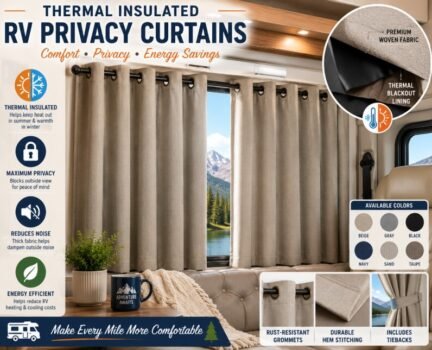
You know that feeling. It’s the middle of the night. The air outside has turned cold, and you can feel it creeping right through the windows next to your bed. Or maybe it’s the opposite. A bright parking lot light is shining straight onto your face, and you can’t drift off no matter how hard you try.
Here’s the good news. The fix isn’t a bigger heater. It isn’t a better campsite either. A lot of the time, the answer is simply what you hang over your glass.
For most folks living or traveling in a camper, a good thermal insulated privacy curtain is one of the cheapest comfort upgrades you can make. It can help you stay warmer when it’s cold, cooler when it’s hot, and hidden from the world when you just want to rest. Let’s walk through how they work, whether they’re worth it, and what to look for before you spend a dime.
What “thermal insulated” actually means
Let’s clear up the fancy words first, because they sound more complicated than they are.
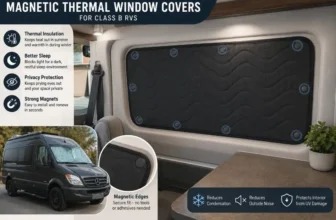
A thermal insulated curtain is just a curtain built to slow down heat. Most are made with a thick fabric, a foam backing or a shiny liner. Sometimes all three layered together. That extra layer acts like a little wall between you and the window.
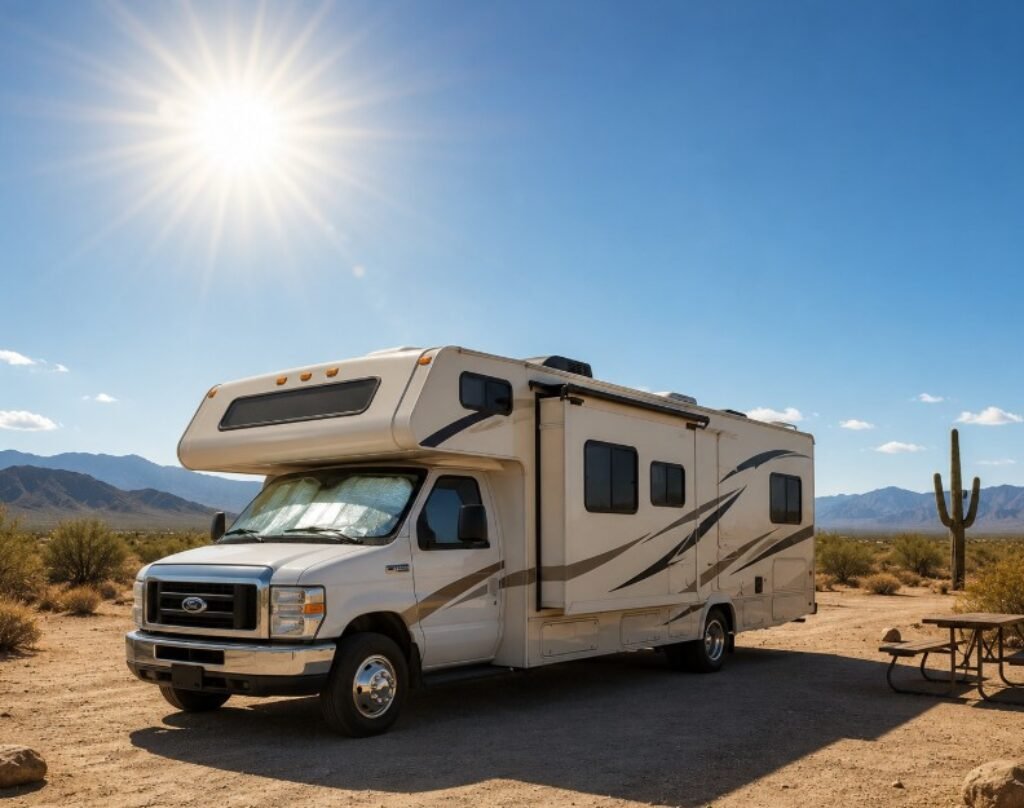
Why does that matter? Because windows are where a camper leaks the most warmth in winter. They’re also where heat pours in during summer. Glass is thin, and it lets temperature pass through easily. A regular curtain barely slows it down. A thermal one fights back.
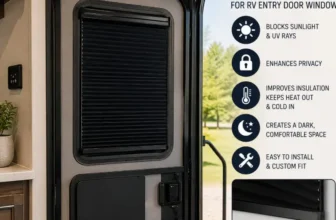
The “privacy” part is exactly what it sounds like. When the sun goes down and your lights come on, people outside can see a shadow moving around inside. A privacy curtain blocks that view, so nobody can see in. That peace of mind is a big deal when you’re parked somewhere new.
Do they really work? The honest answer
Yes, they work. But let’s be straight with each other. They’re a helper, not a miracle.
Think of it this way. Your camper loses heat through a bunch of places at once. The windows, the door, the floor and the roof all let warmth escape. The windows are usually one of the worst spots, and that’s where these curtains do their best work. Covering them can make a real, noticeable difference on a chilly night.
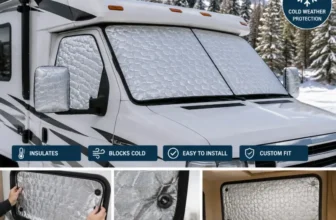
But there’s a catch. A curtain alone won’t keep you toasty when it’s truly freezing outside. For a deep cold, you’d still want other steps too, like covering the windows with foam board or adding a skirt around the bottom of the rig. The curtain is one piece of the puzzle, not the whole picture.
And here’s the reassuring part. You don’t need to wrap your whole home on wheels in foil to feel better. Just covering the windows where you rest your head can take the edge off. Small step, real payoff.
What to look for when you’re shopping
Not all curtains are made the same. Some are thick and warm. Some are thin and pretty but do almost nothing. Here are the things that actually matter:
- Insulation type. Look for foam-backed fabric, a layered build or a reflective liner. These slow heat the most. A single thin layer mostly just looks nice.
- Blackout rating. Blackout means the fabric blocks light. This gives you privacy at night and helps you snooze past sunrise. If you’re parked under a streetlight, this is the feature you’ll be glad you have.
- Fit and how it hangs. Curtains can mount on a track, a rod, snaps or magnets. Pick the one that matches your windows. A loose, floppy curtain leaves gaps, and gaps let heat sneak through.
- Washability and weight. Campers get dusty. A curtain you can toss in the wash will save you a headache. Also check the weight. Heavier usually means warmer, but it needs a sturdy mount.
- Noise reduction. This is a nice bonus. Thick curtains soften outside sounds too, so a noisy campground feels a little quieter.
The cost picture
Let’s talk about real numbers, because that’s what helps you decide.
A pair of basic blackout panels from a regular store can run you around $20 to $50. They won’t be cut to fit your camper, but they’ll cover most windows just fine. A set made just for your rig, with the right size and snaps already in place, can cost $100 to $300 or more.
So which is the better buy? For most people, the off-the-shelf panels are the sweet spot. They’re cheap, easy to find and they do the job. The custom sets are worth the money only if your windows are oddly shaped, or if you want everything to match perfectly. There’s no shame in starting cheap and upgrading later.
Should you make them or buy them?
This one comes down to you.
If you’re handy and you own a sewing machine, you can make a set yourself for less. You buy the insulated fabric, measure your windows and stitch them up over a weekend. People do it all the time, and it saves real money.
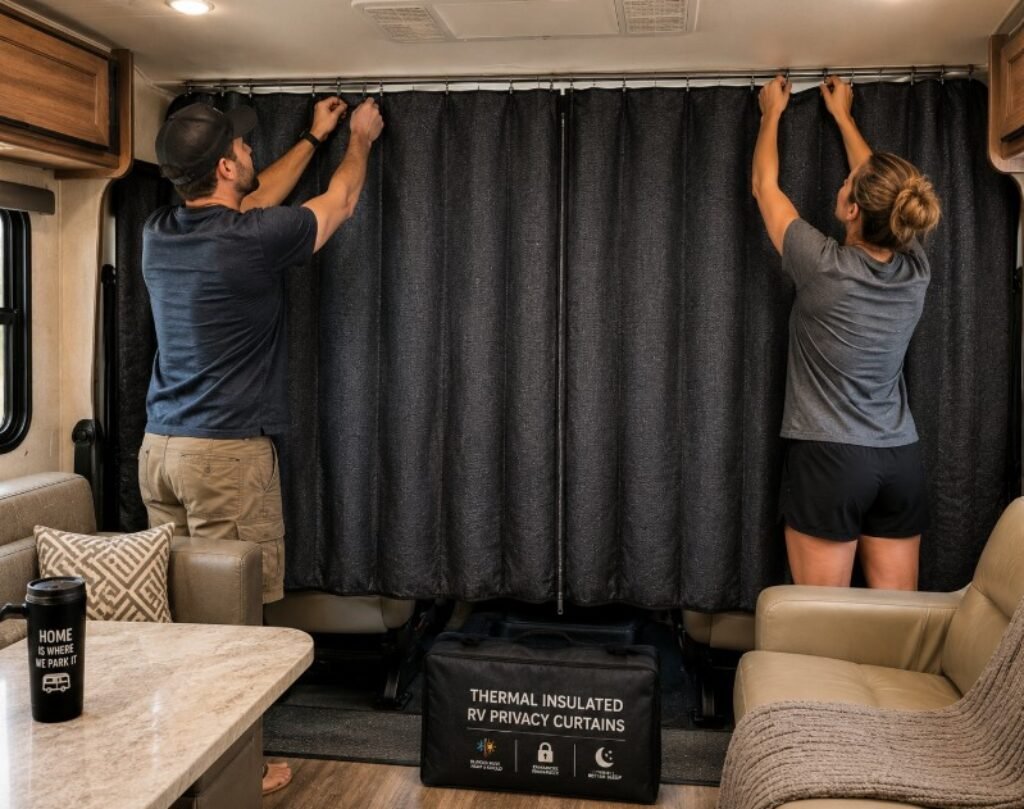
But if sewing isn’t your thing, don’t force it. A ready made set saves you hours of frustration and usually looks cleaner. Either way, watch out for one common mistake. Leaving gaps at the edges. Even a great curtain loses most of its power if cold air can slip around the sides. Make them a little wider and a little longer than the window. Let them overlap.
A few quick wins to pair with your curtains
Curtains do a lot, but they work even better with a couple of teammates. Here are some easy add-ons:
Reflective window film. This cheap, shiny film sticks to your glass and bounces heat back. Paired with a curtain, it’s a strong combo.
Draft stoppers. Those little fabric tubes you lay along a door or window edge stop sneaky cold air. They cost a few bucks and punch above their weight.
Close them early. Don’t wait until you’re freezing. Draw the curtains before the temperature drops, and you’ll trap the warmth while you still have it. Same trick in reverse for hot days. Close them before the sun heats things up.
These small moves help your curtains pull their full weight, so your space stays comfy and your nights stay restful.
Better rest starts at the window
When you’re trying to get a good night’s rest in a camper, comfort is everything. The right curtains help you stay warm, stay private and finally drift off without a bright light or a cold draft bugging you. For the price, few upgrades give you more.
Before you buy anything, do one simple thing. Measure every single window. And yes, even the awkward little ones over the dinette or above the bed. Then check whether your rig uses a track or a rod. That one step takes five minutes, and it saves you the most common return there is. Get the size right, hang them snug, and let the curtains do the quiet work while you finally get some real rest.