 Mike Lee
Here’s something most owners learn the hard way. The damage to a parked camper doesn’t happen while you’re out using it. It happens in the weeks it sits empty, when nobody is around to notice the air turning damp.
An RV is a small, sealed box. It’s full of soft cushions, foam, and wood. When moisture gets trapped inside and nobody opens a window, that water has nowhere to go. It settles into the bedding and the walls.
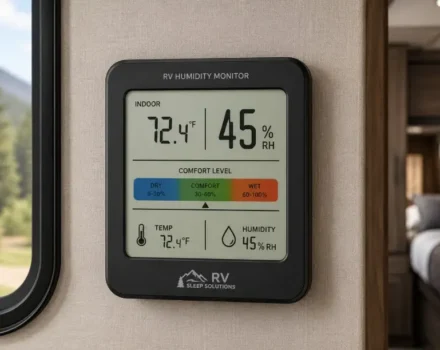
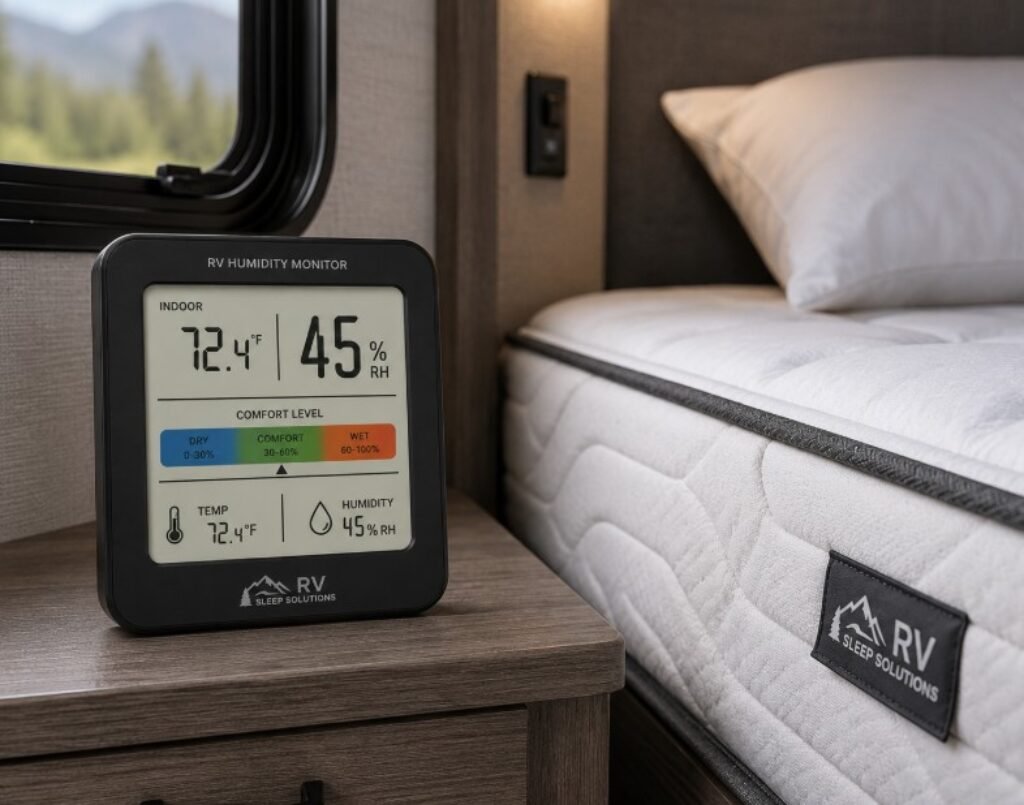
A WiFi humidity monitor won’t fix that problem. But it will tell you the problem is starting while you can still stop it. That’s the whole point of this article. Think of it as a cheap early warning system for the place you sleep.

What Damp Air Does to an Empty Camper
Let’s start with the number that matters. Mold and mildew start to grow once the relative humidity inside climbs past about 60%. The safe range you want is roughly 30% to 50%.
In simple terms, relative humidity just means how much water is floating in the air, shown as a percent. A higher percent means damper air. That’s the number your monitor tracks.
To be clear, a little moisture is normal and harmless. The problem is damp air that sits for weeks, which is exactly what a closed-up camper makes on its own.
Here’s what that damp air does. It grows mold on your foam and cushions. It leaves a sour, musty smell in your blankets and pillows. It can swell wood trim and lead to rot. It can also rust metal parts and cause trouble for your electronics.
Why does “empty” matter so much? Because when you’re not there, nobody runs the air conditioner, cracks a vent, or empties a dehumidifier. The damp just builds up, day after day, with no one to catch it.
What a WiFi Humidity Monitor Actually Is
A humidity monitor is a small sensor that reads the moisture in the air. Some people call it a hygrometer. That’s just a fancy word for the same thing.
A WiFi version adds one feature that really matters when you’re away. It sends those readings to your phone from anywhere. You can be at work or asleep at home and still see the air inside your camper.
Here’s the honest part. A monitor is a smoke alarm, not a fire hose. It reports the problem. It does not solve it. You still need something to pull the moisture out of the air.
That’s why most owners pair the monitor with a small dehumidifier, tubs of moisture-grabbing crystals (often calcium chloride), or a plan to air the rig out on dry days.
WiFi vs Bluetooth vs Cellular: Pick the Right One
Not every monitor connects the same way, and the difference matters a lot for a parked rig.
If Bluetooth keeps you tied to the camper, WiFi keeps you tied to the camper’s network, and cellular cuts the cord for good.
Bluetooth-only models are almost useless for storage. You have to stand right next to the rig to read them. That defeats the whole purpose.
WiFi models work great when your camper is parked at home or at a lot with a network you can use. The catch is simple. They only work as well as the signal they sit on. No signal, no readings.
Cellular models use a data plan, the way a phone does. They work even in a far-off storage lot with no WiFi. The trade-off is an extra monthly cost. Name that cost to yourself before you buy.
Features Worth Paying For
You don’t need every bell and whistle. You do want a few key things.
- Phone alerts. The monitor should ping your phone when the air crosses a level you set. This is the feature that saves your bedding.
- Temperature too. Most units read temperature along with moisture. That gives you a freeze warning before your pipes are at risk.
- History logging. Seeing the trend over weeks beats one quick snapshot. A rising line tells you trouble is coming.
- Good battery and accuracy. Look for accuracy around plus or minus 3%, and a battery that lasts months, not days.
Here’s the both-sides note. More features usually mean more money and more parts that can fail. A simple unit you actually trust beats a packed one you stop checking.
What It Costs and How to Think About It
I’d rather flag this than guess. As a rough guide, basic WiFi units tend to run somewhere around $30 to $60, and cellular models with a data plan cost more on top.
Now do the simple math. A ruined foam RV mattress can cost a few hundred dollars to replace. Water-damaged wall panels cost more. Set the price of a monitor next to those repair bills and the choice gets easy.
Keep it sober, though. This is cheap insurance, not a magic fix. The drying still has to happen. The monitor just makes sure you never get surprised.
How to Set It Up
Placement is simple, but it changes your readings, so do it right.
Put the sensor up at bed level, in the sleeping area. Keep it away from vents and outside walls, since those spots read warmer or cooler than the air you care about.
Set your alert a notch below the danger zone, around 55%. That gives you a warning with room to act, instead of a warning after the mold already started.
Then do the connection check. Make sure there’s a usable network at your storage spot before you lean on WiFi. Plenty of lots don’t have one, and that’s when a cellular model earns its cost.
What to Do When the Alert Goes Off
Don’t panic when your phone buzzes. Just work the steps.
First, check the reading to confirm it’s real. Then add or empty your dehumidifier, refresh your moisture crystals, and open things up to air out on the next dry day. Here’s the honest part. If the alerts keep firing, the monitor is doing its job. Your moisture plan just hasn’t caught up yet.
A Quick Word on Your Bedding
Your foam takes the worst of trapped moisture, so it’s worth a little extra care. Before you store the rig, let the bed fully air out and make sure it’s dry to the touch.
Some owners stand the foam up on its side or slide a moisture-wicking pad under it so air can move on all sides. A dry, well-aired RV mattress fights mold far better than one pressed flat against a cold wall.The monitor watches the air. These small habits protect the foam itself. Together they keep the spot you sleep in fresh between trips.
The Bottom Line
A humidity monitor won’t keep your camper dry on its own. It just makes sure you’re never caught off guard. While it’s the cheapest piece of the moisture puzzle, it’s also the piece that tells you when the rest of your plan is working, and when it isn’t.
Set it up, pick a smart alert level, and watch the trend. Pair it with a way to pull moisture out of the air, and the bed you climb into on your next trip will be dry, fresh, and ready. That’s a small expense for real peace of mind.