 Mike Lee
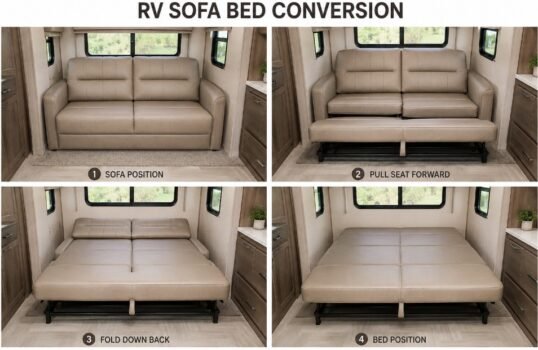
If you own an RV, you know the problem. The couch that turns into a bed sounds great in the showroom. But after one night on it, your back hurts. The bar in the middle pokes you. The cushions slide around. You wake up tired.
The good news? You can fix this. Lots of RV owners are turning their old fold-out couches into something better. This guide will show you how to plan, build, and enjoy a new sleeping setup in your camper.
Why People Want to Change Their RV Couch
Most RVs come with a basic fold-out couch. The makers want to save space and money. That means thin cushions, weak frames, and a metal bar that hits you right in the back.
Here are the top reasons people make a change:
- The cushions are too thin for good rest
- The metal frame digs into your body
- The couch is hard to open and close
- There is wasted space under and around the couch
- Guests complain after one night
- You want better camper bedding without buying a whole new RV
A new setup means better nights for you and your guests. It can also add storage, which is gold in a small space.
When You Should Make the Switch
Not every RV needs a big change. Ask yourself these questions first:
- Do you sleep on the couch often, or only a few times a year?
- Is back or neck pain part of your camping trips?
- Could you use more room to store things?
- Are you keeping this RV for a long time?
If you said yes to most of these, a switch is worth it. If you only use the couch once a year for a guest, a thicker topper might be enough.
Types of Camper Bed Upgrades
You have a few paths to pick from. Each one fits a different need and budget.
Platform Bed With Storage
This is the most popular pick. You take out the old couch. Then you build a wood box the same size. The top lifts up so you can store stuff inside. You add a real foam pad on top.
Best for: full-time campers who want better camper sleep solutions and more storage.
Pull-Out Guest Bed
You keep a couch for daytime sitting. But you swap the cheap fold-out for a better one. Some brands make pull-out beds with thicker foam and no metal bar.
Best for: people who host guests but still need a couch during the day.
Murphy Bed Style
A Murphy bed folds up against the wall. During the day, you have open floor space. At night, you pull it down. This is a bigger build but adds tons of room.
Best for: small RVs where every inch matters.
Dinette Combo Build
You can mix a small table area with a bed. The table drops down and turns into part of the sleeping space.
Best for: people who eat in their RV often.
Planning Your Build
Good plans save you from costly mistakes. Take your time with this part.
Measure Everything Twice
Get a tape measure and write down:
- Length of the old couch
- Width from wall to wall
- Height from floor to ceiling
- Space the slide-out needs (if you have one)
- Where vents and plugs are
Sketch it out on paper. Even a rough drawing helps you spot problems early.
Know Your Weight Limits
Every RV has a weight limit. It’s called the cargo carrying capacity. Wood, foam, and a new bed frame add up fast. Check the sticker inside your RV or your owner’s manual. Stay under the limit so you can drive safely.
Set a Budget
A simple platform build can cost $200 to $500 if you do it yourself. A pro install can run $1,500 or more. Murphy beds cost the most because of the moving parts. Pick a number you can live with before you start.
Pick the Right Foam
The pad on top is the most important part. Cheap foam will let you down fast. Look for:
- Memory foam at least 6 inches thick
- Latex foam for cooler nights
- Hybrid foam with cooling gel
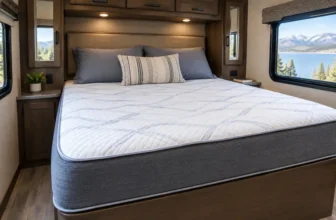
Many people swap their stock pad for a new one made for travel. A good motorhome mattress can change how you feel after every trip.
Tools You Will Need
You don’t need a fancy shop. Most of these tools are cheap or can be borrowed:
- Tape measure
- Drill with bits
- Saw (a circular saw or jigsaw works)
- Level
- Sandpaper
- Screwdriver
- Safety glasses
- Pencil and paper
For materials, plan on:
- Plywood (3/4 inch is strong)
- 2×4 boards for the frame
- Wood screws
- Hinges if you want a lift-up top
- Fabric or vinyl for the sides
- Foam padding
- Glue
Step-by-Step: Building a Platform Bed
Here is the basic path most DIY builders follow.
Step 1: Take Out the Old Couch
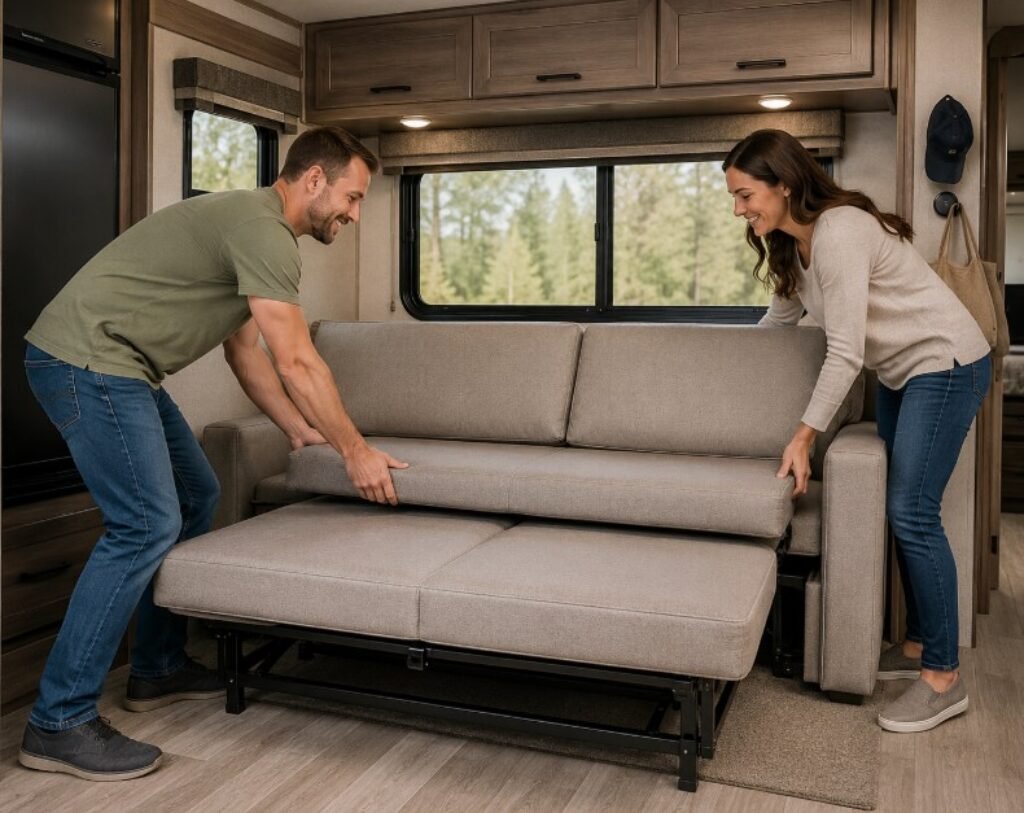
Unscrew the couch from the floor and walls. Most are held in by just a few bolts. Have a friend help you carry it out. It is heavier than it looks.
Step 2: Clean and Check the Floor
You may find dust, lost coins, or even soft spots in the floor. Fix any soft wood before you build on top of it.
Step 3: Build the Frame
Cut your 2x4s to make a box. Screw them together. Add legs or supports every 16 inches so the top won’t sag.
Step 4: Add the Top
Cut your plywood to fit. If you want storage, cut the top into two or three pieces. Add hinges so each piece can lift up.
Step 5: Cover the Sides
Wrap the outside with fabric or vinyl. Use a staple gun to hold it tight. This makes the build look clean and finished.
Step 6: Add Your Foam
Place your new foam pad on top. Cover it with a fitted sheet made for an RV bed size. Boom — you’re done.
Mistakes to Watch Out For
New builders make the same mistakes. Skip these:
- Going too heavy with thick wood and big foam
- Blocking a heater vent under the couch
- Forgetting to leave room for slide-outs
- Picking foam that is too tall to fit under the windows
- Not testing the bed before you finish the cover
Take it slow. Test as you go. Sit on the frame before you cover it. Lay on the foam before you cut the sheets.
Caring for Your New Setup
A nice build can last for years if you treat it well. Try these tips:
- Air out the foam every few weeks to stop mold
- Vacuum under the lift-up tops once a month
- Check screws and hinges twice a year
- Use a mattress cover to keep spills out
- Flip or rotate the foam to make it last longer
Damp air is the enemy in any camper. Run a small fan or use moisture packs in wet seasons.
What You Will Gain
Better rest on the road is a big deal. When you sleep well, you have more fun. You drive better. You enjoy the views more. Good RV bedroom comfort changes the whole trip.
You also gain storage, looks, and value. A clean custom build can make an older RV feel new again. And when it’s time to sell, buyers love a well-done upgrade.
Final Thoughts
Changing your RV couch into a real bed is one of the best upgrades you can make. It takes a weekend or two, some basic tools, and a clear plan. You don’t have to be a pro builder. You just have to measure well, pick good foam, and take your time.
If you’ve been waking up sore, this is your sign. Your back will thank you. Your guests will thank you. And you might finally look forward to bedtime on the road.
If this guide helped you, share it with a fellow camper who needs better rest.