 Mike Lee
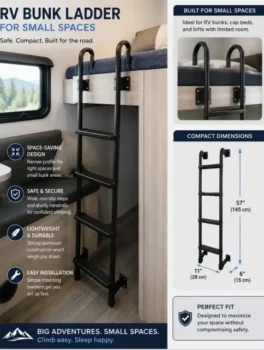
Climbing into a top bunk in a small RV can feel like a fight. There’s barely room to turn around. The ladder that came with your rig wobbles, bangs your shins, and slides out from under you at the worst time. And when you’re not using it, it sits in the one corner you needed for something else.
But here’s the thing. The right ladder fixes all three problems at once. You don’t need a big budget. You don’t need to rebuild anything. You just need to know what to look for, and most of the better options are cheap and easy to swap in.
This guide walks you through the main types of RV bunk ladders, what actually matters when you pick one, and how to store it so it stays out of your way. Let’s get into it.
Why the ladder is a bigger deal in a small rig
In a house, a ladder is no big deal. You’ve got room to spare. In a small RV, every inch counts, and a ladder has to earn its spot.
Three things matter most: floor space, weight and storage. A fixed wooden ladder can eat a 12 to 18 inch strip of floor you never get back. A folding or removable ladder gives that floor back the second you’re up top.
Then there’s weight. RVs have a payload limit. The total amount of stuff your rig can safely carry. A heavy steel ladder counts against that number, so a lighter aluminum one can be the smarter pick.
The good news is the picture isn’t as tight as it looks. There’s a ladder type for almost every bunk height and floor plan, and you’ve got way more choices than the flimsy one your RV came with.

The main types of RV bunk ladders
Here’s a quick rundown of your options. I’ll give you the verdict first, then the reason behind it.
Telescoping ladders
For most small rigs, this is the sweet spot. A telescoping ladder slides down on itself like a collapsing cup, so it shrinks from full height down to just a few inches tall. You climb it at night, then collapse it and tuck it away in the morning.
They hold real weight, they store flat, and they don’t claim any floor space when you’re done. The downside is the steps can pinch if you’re not careful when you fold them, so check that the model you buy has a smooth locking system.
Folding step ladders
These give you flat, wide steps instead of skinny round rungs. If you climb in and out barefoot, your feet will thank you. The trade-off is they’re bulkier folded up than a telescoping ladder, so they take more room to stash.
Hooked or removable rung ladders
This is the type a lot of bunks come with from the factory. It’s light, it’s cheap, and you can lift it off and set it aside. But let’s be honest about it. The thin rungs hurt your feet, the hooks can slip off the rail, and the whole thing tends to wobble.
It’s fine as a backup. It’s not a great ladder you climb every single night.
Built-in or fixed ladders
A built-in ladder feels the sturdiest, and you never have to store it. But it permanently claims a slice of your floor, so it only makes sense when that corner is dead space anyway. If you’re already losing that spot, a fixed ladder is a solid, no-fuss choice.
Rope or strap ladders
These are a last resort. They’re cheap and they pack down to almost nothing, but they sway when you climb, and they’re rough on your hands and feet. Use one for an emergency or a rare guest. Don’t make it your daily setup.
What to actually look for
Once you’ve picked a type, here’s the short checklist that separates a good ladder from a frustrating one.
- Weight capacity: Match it to the heaviest person who’ll use it, not the lightest. Look for a clear rating printed on the ladder or in the listing.
- Reach and height: Measure from the floor to the edge of the bunk first. Then buy a ladder that reaches that number plus a little extra so you’re not stretching.
- Hook fit: If you’re using a hooked ladder, the hooks have to fit your bunk rail. This is where a lot of cheap ladders fail, so check the rail width before you buy.
- Material: Aluminum is light and won’t rust. Wood feels warm and gives a good grip. Steel is the sturdiest but adds the most weight.
- Foot comfort: Wide flat steps beat skinny round rungs when you’re climbing barefoot at 2 a.m.
Folded size: This is the whole point in a small rig. Check the stored size, not just the open one.
Space-saving setups that actually work
The ladder type is only half the job. Where you store it is the other half.
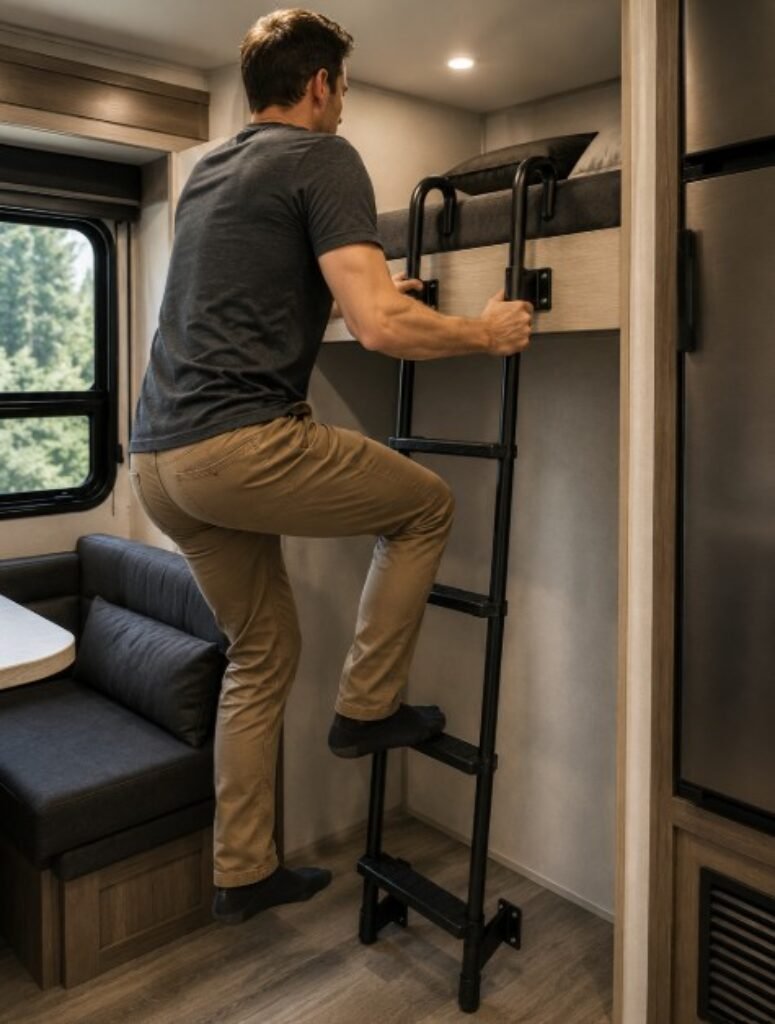
A telescoping ladder paired with a simple wall hook or an under-bunk strap keeps it out of your walking path. You collapse it, hang it, and your floor is clear again. Some removable ladders can also double as a grab bar, giving you something steady to hold while you climb.
One thing people forget: secure the ladder before you drive. A loose ladder turns into a flying object the first time you hit the brakes hard. A bungee cord or a wall clip handles this in seconds.
Safety, especially with kids
If kids are climbing into a top bunk, a stable ladder isn’t optional. A wobbly hooked ladder in a tight space is asking for a fall.
Look for anti-slip feet and a solid locking mechanism on telescoping models. Before the first night, climb it yourself with full weight to make sure it holds steady. It takes ten seconds and it’s worth it.
You don’t need to overthink this. A sturdy ladder with non-slip feet and a locked frame covers almost every worry.
Quick answers to common questions
Can I replace the ladder my RV came with? Usually yes, and you probably should. Most factory ladders are the weakest link in the whole bunk setup.
How much weight should an RV bunk ladder hold? Pick one rated for more than the heaviest person using it. A rating in the 200 to 300 pound range covers most people, but always check the label.
How tall a ladder do I need? Measure floor to bunk edge, then add a few inches. A ladder that’s a little long is easier to use than one that’s too short.
Are telescoping ladders sturdy enough for daily use? Yes, as long as you buy one with a good locking system and a solid weight rating. The cheap ones rattle, so spend a few extra dollars here. Where do I store a ladder in a tiny rig? Collapse it and hang it on a wall hook, slide it under the bunk, or strap it to a flat wall. A telescoping model makes this easy.
The bottom line
You don’t need a custom build or a big budget to fix a bad bunk ladder. Measure the gap from your floor to the bunk edge tonight. Then match it to a telescoping ladder for most small rigs, or a folding step ladder if you want wider steps.
Check the weight rating before night one, add a wall hook so it stores out of the way, and you’re done. The right ladder just disappears into your routine, which is exactly what you want in a space this small.