 Mike Lee
Hi friends, Mike here. Let me tell you a little story. A few summers back, I crawled into bed inside my camper after a long, happy day outside. But that night was awful. The air was hot and thick. My pillow felt like a warm towel. I tossed. I turned. By morning there was water dripping off the ceiling above my head. Yuck.
That was the night I learned a hard truth. You can have the comfiest bed in the world, but if the air inside your camper is hot and damp, you will not rest well. The fix turned out to be small, cheap, and easy. It was a low profile reversible RV roof vent fan. Let me walk you through it, nice and simple.
What This Funny Sounding Fan Actually Is
The name is a mouthful, so let’s break it down into plain words.
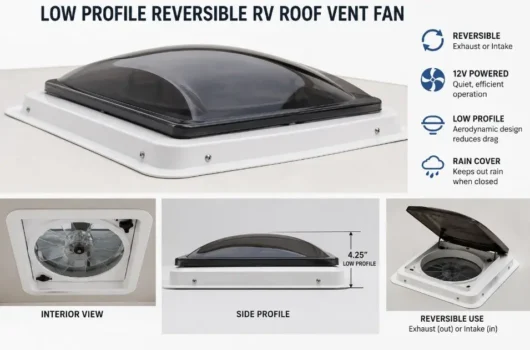
Low profile just means the fan sits close to the roof. It does not stick up high like a big box. That is a good thing. It catches less wind when you drive. It clears low tree branches and garage doors. And honestly, it looks a lot nicer up there.
Reversible means the fan can do two jobs. Flip a little switch, and it pushes hot, stale air OUT. Flip it the other way, and it pulls cool, fresh air IN. So one small fan handles both jobs. I like things that do double duty. That is the frugal way.
Put it all together and you get a quiet little helper on your roof that trades out the yucky air for nice air whenever you want.

Why Airflow Is the Secret to Good Camper Rest
Here is something nobody told me when I started camping. The thing that ruins rest in a camper is usually not the bed. It is the air.
Think about it. Heat rises. All day long the sun beats down on your roof. By bedtime, the hottest air in the whole rig is sitting right up at the ceiling, right over your head. No wonder you feel cooked.
A roof vent fan pulls that trapped hot air out and lets cooler night air flow in. Suddenly the space feels fresh. Your bed feels cooler. You drift off faster. Good RV sleep starts with moving the air, not just buying a fancier mattress.
And there is another bonus. That dripping water I told you about. That is condensation. It happens when warm, wet air from your breath and your body hits a cold ceiling. Moving the air dries things out. Less drip means less mold. And mold is expensive to fix, so this little fan saves you money down the road.
The Payoff: Why I Love This Little Fan
Let me list out the real reasons this upgrade made me so happy.
It beats the heat without the air conditioner. Running the A/C all night eats fuel and drains your battery. A vent fan sips just a tiny bit of power. For folks who camp off the grid, that is a huge deal.
It kicks out bad smells. Cooking dinner. Stinky shoes by the door. A quick flip of the switch and the funk is gone.
It fights that damp, musty feeling. Dry air means better camper sleep and a rig that smells clean.
It is quiet. Most run with a soft hum that actually helps you nod off, like gentle white noise.
Best of all, it is cheap. For around the price of one tank of gas, you get comfort all season long. That is my kind of math.
What to Look For Before You Buy
Now, do not just grab the first fan you see. You should always read the label. Here is my simple checklist.
Measure your opening first. Most campers have a 14 inch by 14 inch hole in the roof. Most fans are built to fit it. But measure anyway, just to be safe. Measuring twice saves crying once.
Check the airflow number, called CFM. A bigger number means the fan moves more air. More air means a cooler space on hot nights. If your rig is small, you do not need the biggest one.
Look for more than one speed. A low setting is nice for quiet nights. A high setting is great when you walk in and the place feels like an oven.
Make sure it is truly reversible. Some cheap fans only blow one way. You want the kind that goes both in and out.
Watch the power draw, listed in amps. A lower number is friendlier to your battery and your solar panels. This matters a lot if you camp away from hookups.Think about a rain sensor. Fancier fans close the lid by themselves if it starts to rain. No more jumping up in a storm. It costs a bit more, but for many people it is worth it.
Read the warranty. I live by a simple rule: buy once, cry once. A fan with a good warranty often lasts longer and saves money over time.
Cheap, Middle, or Fancy: Where to Spend
You do not need the top model to rest well. Here is how I think about it.
The cheap pick is a plain fan with a manual switch. You flip it by hand. It still cools your space and improves your camper rest just fine.
The middle pick adds a few speeds and a rain sensor. This is the sweet spot. It is the one I point most friends toward. You get real comfort without paying for stuff you will never use.The fancy pick has a remote, a temperature setting, and an automatic lid. If you live in your rig full time, this can be worth every penny. For a weekend camper, it is a treat, not a must.
You Can Put It In Yourself
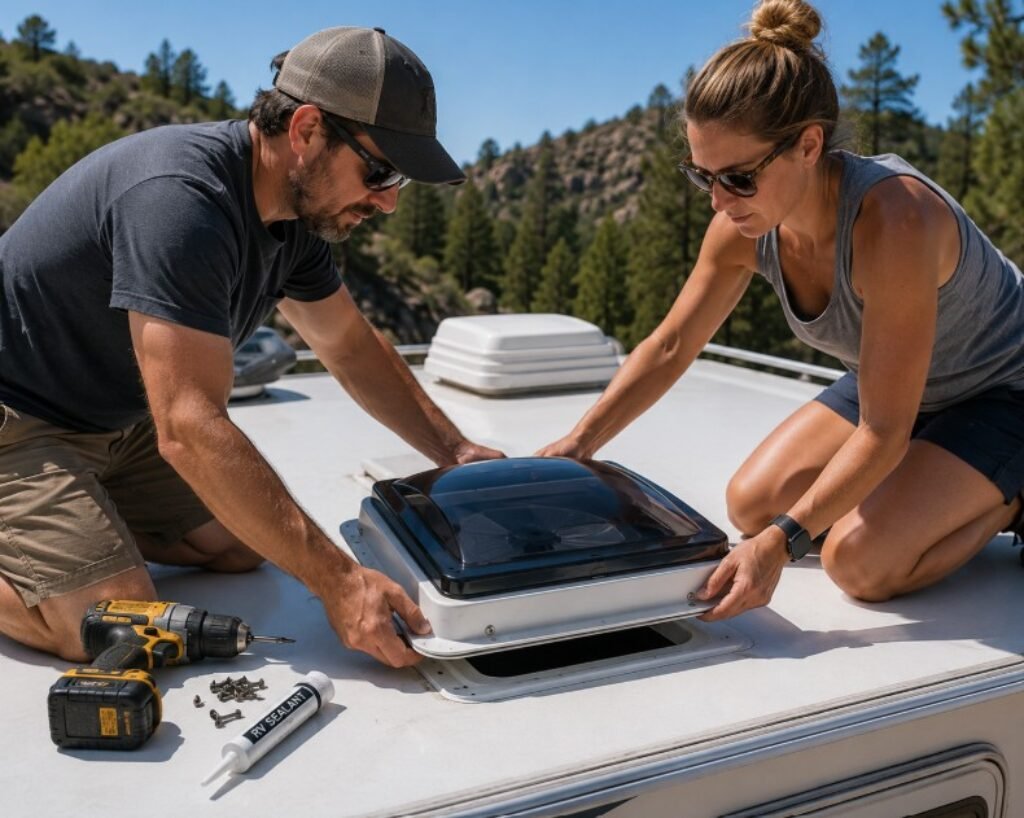
Here is the good news. If you are swapping out an old vent for a new fan, the job is pretty simple. Many folks finish it on a quiet Saturday with basic tools.
You take off the old vent. You clean up the spot. You set the new fan in place. Then you seal it up tight. That last part is the big one. Do not be cheap on the sealant. A few extra dollars of good sealant keeps water out. A leak can ruin your ceiling and cost you way more than the fan did. Do not skip the sealant.
If you have to cut a brand new hole in your roof, that is harder. If you feel nervous, there is no shame in paying a pro. Peace of mind is worth something too.
Keep It Happy and Lasting
A little care goes a long way. Once or twice a season, wipe the blades and clean the screen. Dust slows the fan down. Check the seal around the edge each year to make sure it is still tight. If the lid or screen ever cracks, you can pop in a new one for cheap. Treat it kindly, and your fan will give you years of cool, restful nights.
The Bottom Line
Here is the whole thing in one breath. A low profile reversible RV roof vent fan is small, cheap, and easy to install. It pulls out the hot, damp air that wrecks your rest and lets fresh air flow in. It saves fuel, fights mold, and helps you sleep like a baby in your camper.
If you have been blaming your bed for those rough nights, the real problem might be hiding up on your roof. Grab the right fan, seal it up well, and thank yourself all summer long. Sweet dreams, friends.