 Mike Lee
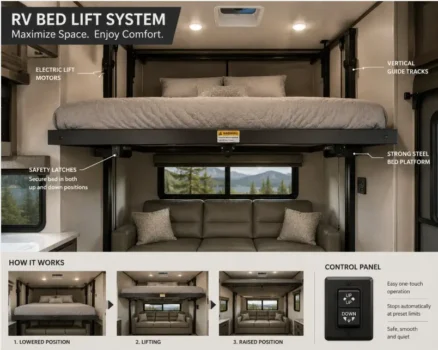
You love your RV. But you probably don’t love that the bed takes up half the room. And the space under it? It’s either packed too tight to use or too hard to reach.
We get it. That bed feels like a big waste of space during the day. But there’s a simple fix. It’s called an RV bed lift system, and it can hand back floor space you forgot you had.
Let’s walk through what it is, what it costs and whether it’s right for you.
What is an RV bed lift system
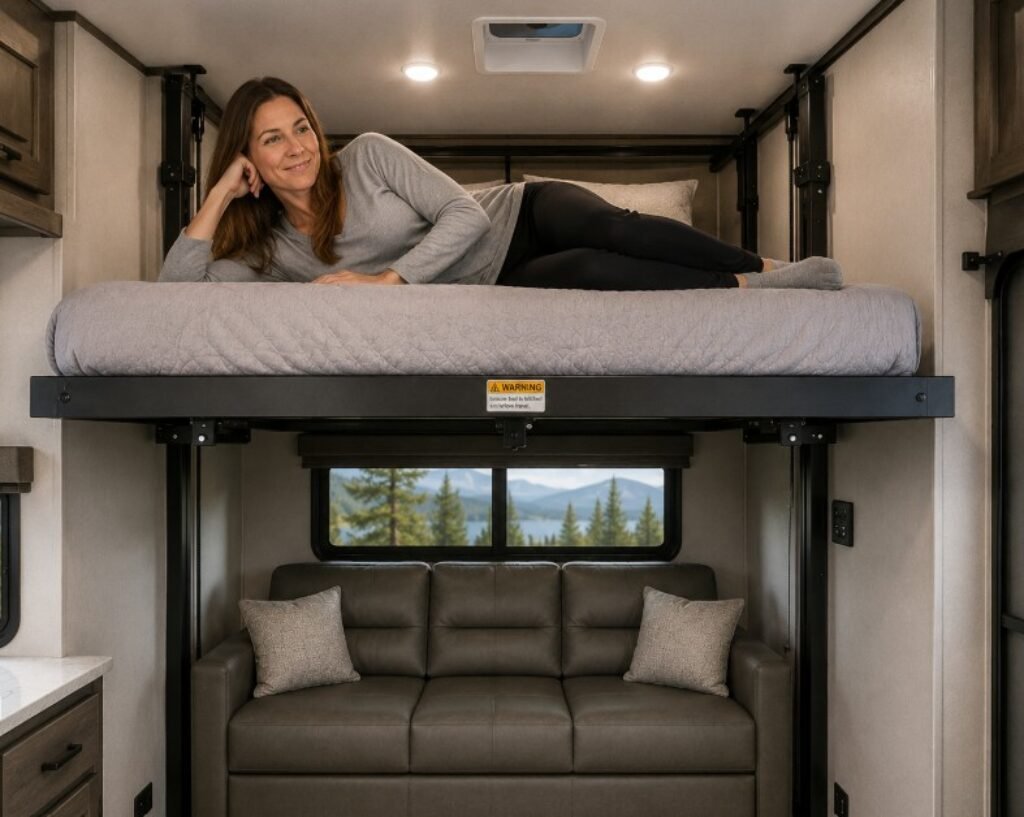
A bed lift is a frame that raises your bed up toward the ceiling. When the bed goes up, the floor under it opens up. Now you’ve got room to store your gear, or even stand and move around.
There are two main kinds.
- Electric lift: A motor does the work. You press a button on a remote, and the bed rises on its own.
- Manual lift: You lift the bed yourself. Springs or gas struts (small metal tubes filled with gas) help carry the weight, so it’s not as hard as it sounds.
Both do the same job. They just do it in different ways.

Why do people add one
Here’s the thing. Most RVs are small. Every inch counts. A bed lift turns dead space into space you can actually use.
Say you’ve got a toy hauler. Lift the bed, and you can park bikes, a big cooler or a generator right underneath. In a small camper van, lifting the bed during the day gives you room to cook, work or just stretch out.
To put it in real numbers: a lifted bed can free up 30 square feet or more. That’s about the size of a small bathroom. Not bad for a spot you used to crawl over.
And storage isn’t the only win. A bed lift keeps your stuff off the main floor. That means fewer things to trip over and a cleaner camper. When the day is done, you lower the bed back down and you’ve got a comfy place to sleep. Up for storage, down for rest. Simple.
The types and the honest trade-offs
Let me be straight with you. No single lift is best for everyone. It comes down to your budget and how much work you want to do.
Electric lifts are the easy-button choice. Press a button and walk away. But they cost more, and they need power and wiring. One more moving part means one more thing that could break down the road.
Manual lifts cost less and have no motor to fail. The downside. You do the lifting. If you’ve got a bad back or a heavy bed, that’s worth thinking about.
Then there’s how the lift moves the bed.
- Cable lifts use strong cords and pulleys to raise the bed flat and level.
- Scissor lifts use crisscross metal arms that fold and unfold, kind of like a pair of scissors.
Cable types often handle more weight. Scissor types can be sturdier and need less ceiling room. Check both against your camper before you pick.
What does it cost
This is the part most folks really want to know. So let’s get to it.
A manual bed lift kit usually runs $200 to $600. That’s the cheaper road, and lots of handy people install it themselves over a weekend.
An electric system costs more. Expect $800 to $2,500 or more once it’s installed. The price climbs based on a few things:
- Bed size. A king takes more lift than a twin.
- Weight limit. A lift rated for 500 pounds costs less than one rated for 800.
- Who installs it. Doing it yourself saves money. Paying a shop adds labor costs.
So the gap is wide. But there’s an upside. Even the low end can change how your whole RV feels day to day.
Can you install it yourself
For a manual kit, often yes. If you can use basic tools and follow a guide, a weekend job is doable. Many kits come with the bolts and brackets you need right in the box.
Electric is trickier. You’re dealing with wiring, a motor and framing that has to hold real weight over your head. If that makes you nervous, good. It should. Pay a pro for that one. The cost of a mistake is a whole lot higher than the cost of help.
There’s no shame in either path. The goal is a bed that lifts safely, not a story about the time it didn’t.
Pick the right bed for your lift
Your lift is only half the story. The bed on top matters too.
A lighter mattress is easier on any lift, electric or manual. Thick foam beds can weigh 70 pounds or more. Add that to the frame, and a weak lift will struggle.
Here’s a simple rule. Weigh your mattress before you shop for a lift. Then pick a lift that handles that weight, plus your bedding, with room to spare.
If you’re buying a new bed too, look for one built for a camper. A good RV mattress is made to be a bit lighter and to fit the odd bed sizes campers tend to have. That helps your lift work smoothly. And it helps you sleep well at the end of a long day on the road.
What to check before you buy
Before you spend a dime, run through this quick list:
- Weight limit: Add up your bed, your bedding and anything you plan to store on top. Pick a lift that handles more than that, not less.
- Ceiling room: Measure how high the bed needs to go. Make sure it fits with some room above.
- Frame type: Your RV’s walls and ceiling have to be strong enough to anchor the lift safely.
- Power draw: Electric models pull from your battery. Know how much before you wire one in.
- Warranty: A longer warranty tells you the maker trusts its own part.
Take your time here. A few minutes of measuring saves you a big headache later.
Is a bed lift worth it
For most RVers who feel cramped, yes. You get back floor space you’re already paying to haul around. You get cleaner storage. And you stop climbing over a bed just to grab a jacket.
If your camper is roomy and you’ve got storage to spare, you can probably skip it. No need to fix what isn’t bugging you.
But if that bed feels like it’s eating your whole rig, a lift earns its keep fast.
The bottom line
A bed lift is one of the easier upgrades you can make to an RV. It’s not cheap on the electric end, but the payoff is real space you can use every single day.
Start by measuring your room and weighing your bed. Then match a lift’s weight limit to what you’ll actually store on it. Get those two numbers right, and the rest falls into place.
Your future self, the one not crawling over a bed to find a jacket, will thank you. And you’ll still get a good night’s sleep when the bed comes back down.