 Mike Lee
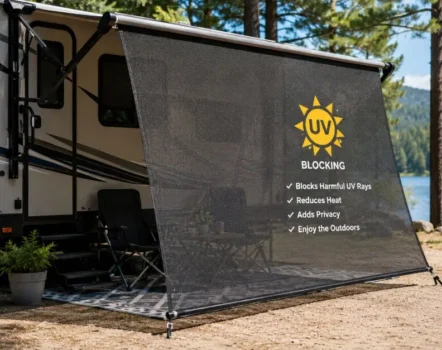
It’s 9pm and the campground has finally gone quiet. Your fan’s running, the windows are cracked, and the outside air has dropped into the 70s. But the wall next to your bed is still warm, and it stays warm past midnight, because your RV spent all afternoon soaking up sun on that side and it’s giving that heat back one hour at a time. An awning shade screen is the cheapest thing you can hang between the sun and that wall.
Why the wall next to your bed is still warm at midnight
Think about a car parked in a lot all day. You open the door at 6pm and the seat is still hot, even though the sun moved hours ago. Your RV does the same thing, just slower and bigger.
Most RV walls are thin. Aluminum or fiberglass siding, a layer of insulation, and then the inside panel. Single-pane windows make it worse because glass passes heat straight through.
All afternoon, that sun-facing wall pulls in heat. After dark, it releases that heat back into your rig.
Here’s the part that matters for sleep. On most travel trailers and fifth wheels, the long sun-facing side is also the bedroom side. So the warmest surface in your RV at bedtime is often 18 inches from your pillow.
Picture a site facing west in July. It’s 92 degrees at 4pm and full sun hits that whole wall for four straight hours. By 8pm the outside temperature has dropped, but your bedroom hasn’t caught up yet.
Your A/C runs harder. Your fan runs longer. And you wake up at 2am kicking the sheet off.
What an awning shade screen actually is
A shade screen is a mesh panel that hangs from your awning roller tube down toward the ground. It fills the gap that a flat awning leaves open.
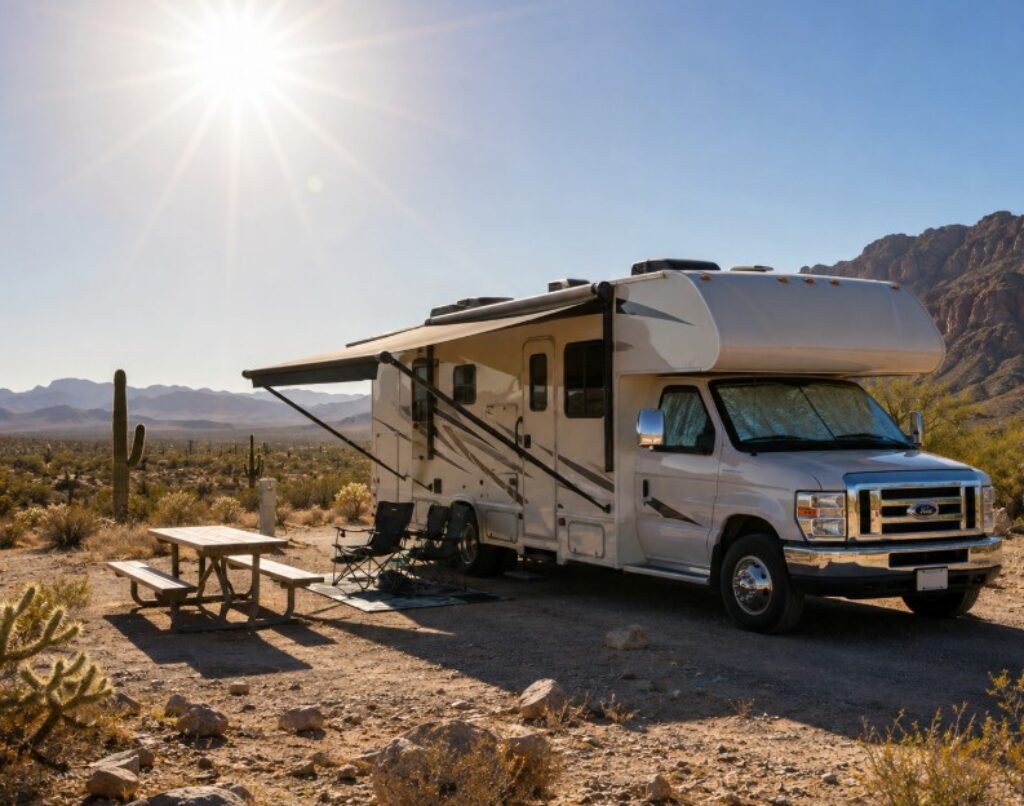
Your awning blocks the sun from straight overhead. It does almost nothing when the sun drops low in the afternoon and comes in sideways.
That sideways sun is the sun that heats your wall. The screen catches it.
Most screens are made from knitted HDPE mesh or vinyl-coated polyester. HDPE is the same material used for the shade cloth you see over plant nurseries and parking lots.
You’ll see these sold as sun shades, sun blockers, and awning screens. Brands use the terms loosely, so read the product description instead of trusting the name.
Shade percentage, in plain terms
Screens come rated at 80, 85, 90, or 95 percent. That number tells you how much light the fabric blocks.
Think of sunglasses. Darker lenses cut more glare, and they also cut more of everything else.
A 95 percent screen gives you deep shade and very little airflow through the mesh. An 80 percent screen lets more breeze through and lets more sun through with it.
For most people camping in normal summer heat, 90 percent is the middle ground that works. Go to 95 if you’re parked in open desert sun with no tree cover.
Shade screen or privacy screen, and why the difference matters
These get sold side by side and they solve different problems.
| Shade screen | Privacy screen | Solid vinyl panel | |
| Fabric | Open mesh | Tighter weave | No holes at all |
| Airflow | Good | Limited | None |
| Blocks the view | Partly | Yes | Yes |
| Blocks sun | Good | Very good | Most |
| Heat underneath | Stays comfortable | Warmer | Warmest |
A privacy screen is woven tighter. It’s built to block the view first and the sun second.
Solid vinyl blocks the most sun of the three. It also traps the most heat in the space underneath, which turns your awning area into a hot box on a still day.
So run through your actual site before you pick. Is your rig parked in the open sun, or under trees? Is your neighbor 15 feet away? Do you sit outside in the afternoon, or are you just trying to cool the wall?
If you’re mostly chasing cooler sleep, the open mesh does the job and keeps the air moving. If you’re parked in a packed campground and want to eat dinner without an audience, the tighter weave earns its price.
How to measure so it fits the first time
This is where most returns come from. Measuring wrong costs you a shipping label and two weeks of summer.
Measure the roller tube, and only the roller tube. That’s the metal bar the fabric wraps around.
Do not measure the fabric itself. Awning fabric runs shorter than the tube, and that difference is exactly what trips people up.
Here’s the part that catches people. A 20 foot awning does not have 20 feet of fabric. Manufacturers name awnings by the tube length, and the fabric is usually shorter.
Follow these steps:
- Extend the awning fully, at the height you normally set it
- Measure the roller tube end to end, in inches
- Measure from the tube straight down to the ground
- Write both numbers on your phone so you have them when you order
Awnings are typically sold in even lengths like 16, 18, 20, and 21 feet. Your screen needs to match your tube, not your rig’s overall length.
Anchor it like a tent, not like a tarp
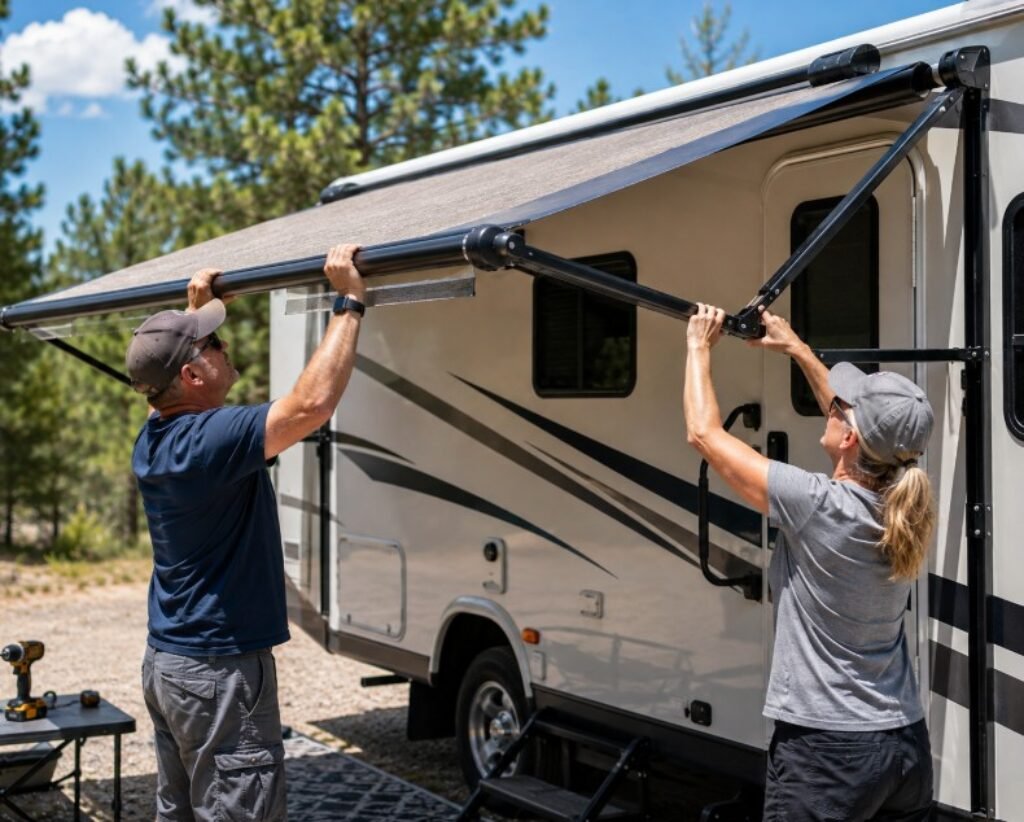
You already know how to stake a tent. This is the same job.
Most kits come with ground stakes, bungee cords, or a weighted bottom pole. The screen hangs from the tube at the top and gets pulled tight at the bottom.
Leave a small gap at the bottom instead of sealing it to the dirt. A gust needs somewhere to go, and a sealed panel turns into a sail.
Speaking of wind, that’s the real risk here. Sun won’t hurt your awning. Wind will.
A shade screen hanging from an extended awning catches a lot more air than the awning alone. If the wind picks up or a storm rolls in, take the screen down and roll the awning in.
Awning damage runs into real money and it’s almost never covered as a defect. So build the habit now. Wind picks up, screen comes down, awning goes in.
What you’ll actually pay
Prices move constantly, so treat these as tiers instead of hard numbers.
- Budget mesh panels: basic fabric, fewer grommets, bungees included. Fine for occasional weekend use.
- Mid-range branded kits: better edge binding, more attachment points, sized to common awning lengths.
- Custom-sized screens: made to your measurements, heavier hardware, longest lead time.
Where the money actually goes is the edges. Grommet spacing, binding quality, and whether the hardware comes in the box or costs extra.
Cheap screens usually fail at the grommets first, where the fabric tears around the metal ring after a season of pulling tight.
When a shade screen is the wrong fix
Sometimes this isn’t your problem to solve, and buying one won’t help.
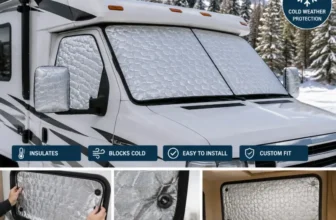
If you’re in a Class C or Class B and your heat is coming through the roof vents and the windshield, the awning side isn’t where your heat lives. A windshield cover and a roof vent fan will do far more for the same money.
If you change sites every day or two, the setup and takedown time adds up. Figure 10 minutes each way, on top of everything else you’re already doing at a new site.
And if you camp somewhere with regular afternoon storms or steady wind, you’ll spend more time rolling it up than sitting under it.
In any of those three cases, put the money toward reflective window covers or a better vent fan first. Those work while you’re driving, while you’re parked, and while the wind’s blowing.
Getting the most out of the one you buy
Set it up on the side that catches sun from 2pm to sunset. In most of the country, that’s the west or southwest side of your rig.
You can find that side without any tools. Stand outside at 4pm on a sunny day and see where your shadow falls.
Then work the airflow. Crack the windows on the shaded side and run your fan pulling air across the bed from that direction.
Cooler air comes from the shaded side. Warm air leaves through the sunny side. Your fan just moves it in the right direction.
Take the screen down at night if you want a breeze. That mesh cuts wind along with sunlight, and after dark you want the wind.
Common questions
Will an awning shade screen actually make my RV cooler inside? It reduces how much heat that wall absorbs during the day, and you’ll notice it most in the evening rather than as an instant drop on the thermostat.
What shade percentage should I get? 90 percent handles most summer camping, and you’d only go to 95 in open desert sun where you don’t mind losing airflow.
Can I leave the shade screen up overnight? You can, though most people take it down after sunset because the mesh blocks breeze along with sunlight.
Do I have to take it down if the wind picks up? Yes, and roll the awning in with it, because a screen hanging from an extended awning catches wind like a sail.
Will it work with my awning, or do I need a specific brand? Most screens attach to the roller tube on standard Dometic and Carefree awnings, though you’ll want to confirm your exact model before ordering.
Sleeping through the night
Getting this right means the wall next to your bed is boring at 9pm. No heat radiating off the panel, no fan working overtime, no waking up at 2am to kick off the sheet.
Before you order anything, go stand outside your rig at 4pm on a sunny day and note which wall the sun’s actually hitting. Then measure that awning at the roller tube, in inches, and write the number down.
That’s the whole decision.