 Mike Lee
Cold-weather camping sounds cozy until you wake up to wet windows, damp walls and that musty smell that won’t quit. You crack an eye open, touch the wall by your head, and it’s soaking. Not fun.
But here’s the good news. That moisture problem is fixable, and it’s cheaper to fix than most folks think. The trick is picking the right kind of dehumidifier for the cold because the popular ones quit working right when you need them most.
Let’s walk through it.
Why Winter RV Condensation Gets So Bad
First, let’s name what’s happening. Every time you breathe, cook, shower or boil water for coffee, you put moisture into the air. Two people sleeping can add a couple pints of water to the air overnight. That’s real.
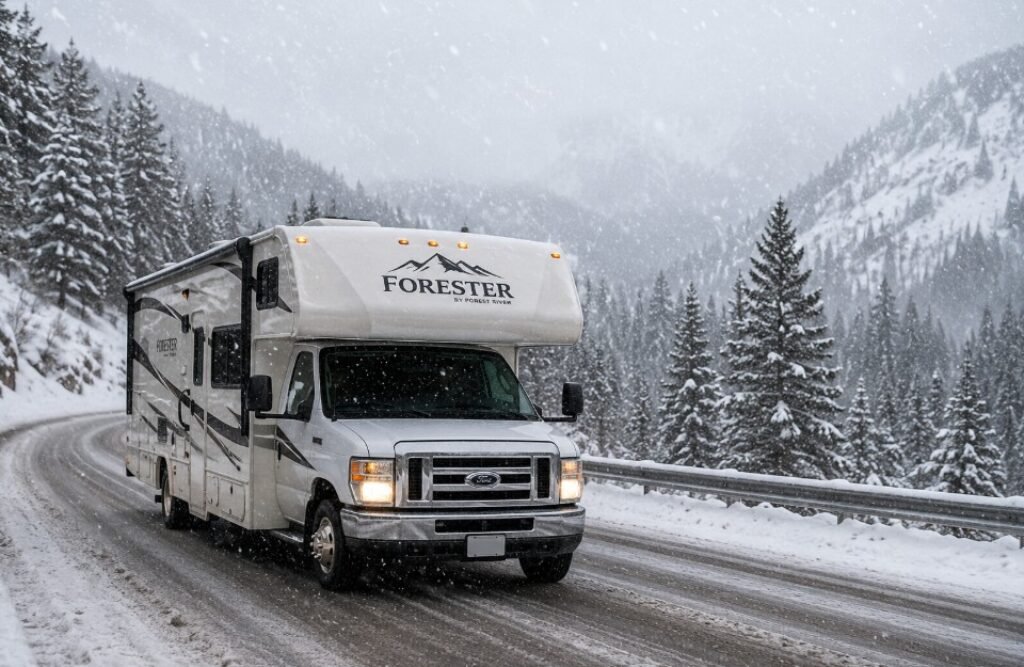
In summer, that moisture floats out an open window. In winter, you seal everything up tight to stay warm. So the water has nowhere to go. It hits your cold windows and walls and turns back into liquid. That’s condensation.
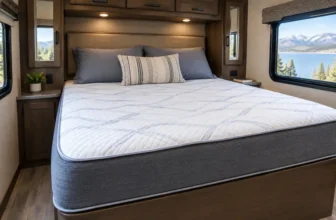
And here’s the part that stings. All that damp air settles into the softest thing in your camper, bedding, and mattress. Left alone, it turns into mildew. Nobody wants to sleep on that.
So the goal is simple. Pull the extra water out of the air before it ruins your stuff.
How a Desiccant Dehumidifier Works in a Cold Camper
There are two main kinds of dehumidifiers, and the difference matters a lot when it’s freezing out.
Compressor dehumidifier: The common house kind. It cools the air to squeeze water out, kind of like how a cold soda can sweat. Works great in warm rooms. But drop below about 60°F and it starts to choke. Below 41°F, ice forms inside it and it basically gives up.
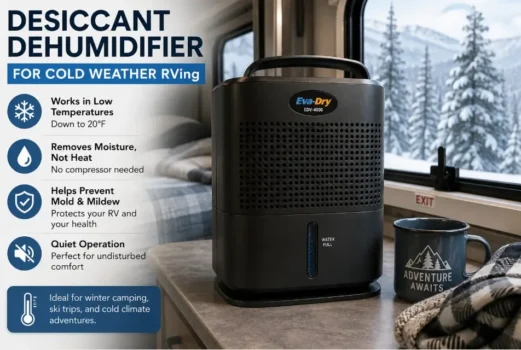
Desiccant dehumidifier: This kind uses a drying material. Think of the little “do not eat” silica gel packets, but way bigger and built into a machine. It soaks up water straight from the air, then gently warms that material to release the water into a tank. No cold coils to freeze up.
That’s the whole reason desiccant models win in the cold. They keep pulling water at 40°F, 35°F, even lower. A compressor unit is already napping by then.
The bonus? A desiccant unit puts off a little warmth while it runs. Usually a few degrees. In a chilly camper, that’s a small win, not a problem.
Best Desiccant Dehumidifier Picks for Winter RV Living
Prices and models change fast, so treat these as categories to shop, not gospel. Check current specs and cost before you buy.
The small-camper pick. For a van, teardrop or short trailer, look for a compact desiccant unit that pulls around 13 to 16 pints a day and weighs under 15 pounds. Small footprint, easy to stash under a dinette.
The full-timer pick. Living in your rig through winter? Step up to a unit rated for larger spaces with a bigger tank, so you’re not emptying it three times a day. Look for a built-in humidity setting so it shuts off on its own once the air hits your target.
The budget pick. Not ready to spend real money? A basic desiccant unit or even a few rechargeable moisture absorbers can take the edge off. They won’t match a powered machine, but for a weekend trip they help.
A quick honest word on power. Desiccant units use more electricity than compressor ones because they gently heat that drying material. If you’re on shore power, no big deal. If you’re running off battery and solar, check the wattage first. Some pull 300 to 600 watts and that adds up fast off-grid.
What to Look For Before You Buy
Don’t get lost in fancy features. A few things actually matter for cold-weather use.
Low-temperature rating. This is the big one. Read the specs and make sure it’s built to run below 41°F. If the listing doesn’t say, assume it can’t.
Tank size or drain hose. A bigger tank means fewer trips to dump it. Better yet, some units take a hose so they drain straight into your sink or gray tank. Set it and forget it.
Auto shut-off. You want it to stop when the tank is full so it doesn’t overflow. A humidity setting is even nicer, so it only runs when the air’s actually damp.
Weight and size. You already fight for every inch and every pound in a camper. Measure your spot before you order.
Noise. You’ll likely run this near where you sleep. Look for a quiet mode if you’re a light sleeper.
Where to Put a Dehumidifier in Your RV
Placement makes a real difference, and folks get this wrong all the time.
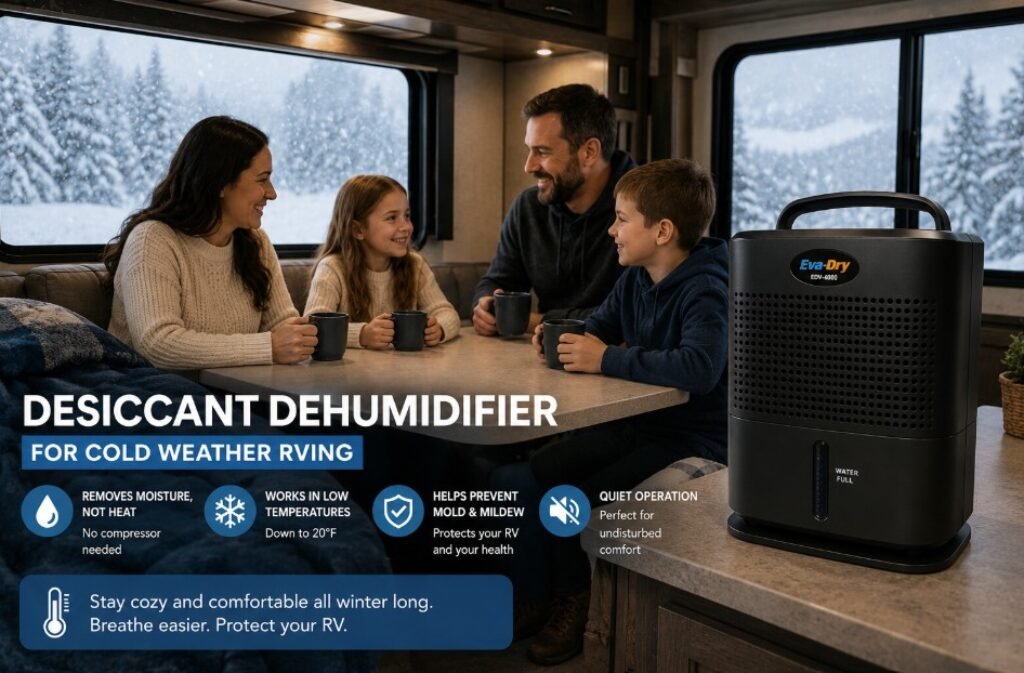
Set the unit somewhere central, with air space around it. Don’t cram it in a closet or shove it against the wall. It needs to pull air in freely. A spot near the middle of your living area works well.
Keep it a little raised off the floor if you can, since a shelf or low table gets better air flow than the ground. And point it away from your bed, not at it, so you’re not getting a light breeze all night.
If moisture in your sleeping area is your main worry, run it a few hours before bed to dry the space out, then switch to quiet mode overnight. Your bedding will thank you.
Keeping Your Camper Mattress Dry in Freezing Temps
A dehumidifier does the heavy lifting, but a few cheap habits protect where you sleep even more.
Crack a roof vent just a hair, even in winter. It feels backward, but letting a tiny bit of damp air escape cuts condensation a lot. You lose a touch of heat and gain a much drier space.
Lift your bed off the platform now and then. Moisture loves to hide underneath, against that cold wood or metal. Some folks add a slatted or mesh layer under the mattress so air can move below it.
Wipe your windows down in the morning when they fog. Two minutes with a cloth stops that water from dripping into your walls and cushions.
And on a sunny afternoon, pull back the covers and let things air out. Dry heat and a little sunlight go a long way toward keeping your sleep space fresh.
Desiccant vs Compressor: The Quick Verdict
If you only camp in warm weather, save your money and grab a compressor unit. They’re cheaper to buy and cheaper to run.
But for cold-weather trips, a desiccant model is the clear call. It keeps working when the temperature drops, it throws off a little bonus heat, and it protects the stuff that matters most while you’re bundled up asleep. For most winter campers, that’s the sweet spot.
FAQ
Do I really need a dehumidifier if I already crack a window? Venting helps, but it usually isn’t enough on its own in cold weather. Pairing a small vent opening with a desiccant unit gives you the best results.
Will it dry the air out too much? Not likely in a camper in winter. Aim to keep humidity somewhere around 40 to 50 percent. If your unit has a setting, park it there.
Can I just use those little moisture-absorber tubs? They help in a pinch, especially in tiny rigs. But they can’t keep up with two people breathing all night in a sealed camper. Think of them as backup, not the main plan.
Is the extra power draw worth it? On shore power, easily. Off-grid, check the wattage first and decide if your battery and solar can handle it.
The Bottom Line
Winter camping doesn’t have to mean wet walls and a musty bed. The moisture is just water you put in the air, and the right tool pulls it back out before it settles into your sleep space.
Grab a desiccant unit rated for the cold, give it room to breathe in a central spot, and pair it with a cracked vent and a quick morning wipe-down. That’s most of the battle right there.
Do that, and the only thing you’ll wake up to is the view and not a soggy pillow.